Environmental health
Environmental health refers to the branch of public health concerned with all aspects of the natural and built environment affecting human health. It involves understanding and addressing environmental factors that have the potential to adversely affect the health and well-being of individuals and communities.

.jpg)


Definition and Scope[edit]
Environmental health encompasses the assessment and control of those environmental factors that can potentially affect health. It targets preventing diseases and creating health-supportive environments by addressing chemical, physical, biological, social, and psychosocial factors.
Components of Environmental Health[edit]
Key components include:
- Air quality: Managing pollutants and ensuring clean air to reduce respiratory and cardiovascular diseases.
- Water quality: Ensuring safe drinking water and adequate sanitation to prevent diseases such as cholera and diarrhea.
- Waste management: Proper handling and disposal of waste materials to minimize exposure to hazardous substances.
- Food safety: Protection against contamination and foodborne illnesses through safe handling, processing, and storage practices.
- Housing and urban development: Promoting housing that supports good health by preventing overcrowding, poor sanitation, and inadequate ventilation.
- Radiation control: Management and protection from hazardous radiation exposures from medical, industrial, and environmental sources.
Importance[edit]
Environmental health significantly influences overall public health and well-being. Healthy environments reduce the incidence of chronic diseases, infectious diseases, and enhance quality of life. Addressing environmental health challenges requires coordinated efforts at local, national, and global levels.
Common Environmental Health Hazards[edit]
Hazards include:
- Chemical hazards: Pollution from pesticides, industrial emissions, and heavy metals.
- Physical hazards: Noise pollution, radiation, and extreme temperatures.
- Biological hazards: Disease vectors like mosquitoes, rodents, and pathogens in water and food.
- Social and psychosocial factors: Overcrowding, poverty, and stress due to environmental degradation.
Preventive Measures and Policies[edit]
Effective environmental health management involves:
- Developing and enforcing environmental regulations and standards.
- Promoting sustainable and eco-friendly practices.
- Education and awareness programs on environmental impacts on health.
- Public health interventions targeting specific environmental risk factors.
Global Initiatives[edit]
Several global initiatives address environmental health:
- World Health Organization (WHO): Provides guidance and sets global standards for environmental health.
- United Nations Environment Programme (UNEP): Works to implement environmental agreements that protect human health.
- Sustainable Development Goals (SDGs): Goal 3 (Good Health and Well-being) and Goal 6 (Clean Water and Sanitation) directly relate to improving environmental health.
Challenges and Future Directions[edit]
Major challenges include climate change, urbanization, pollution, and resource scarcity. Future strategies focus on sustainability, resilience, and proactive management of environmental risks to safeguard public health.
Environmental health gallery[edit]
-
 Air pollution amid blue skies
 -
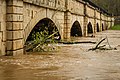 Runoff
 -
 Qantas B747 over houses
 -
 Tube well installation project for safe drinking water

.jpg)


See Also[edit]
- Public health
- Environmental protection
- Pollution
- Sanitation
- Sustainability
- Climate change and health
| Toxicology | ||||||||||
|---|---|---|---|---|---|---|---|---|---|---|
|
Ad. Transform your life with W8MD's
GLP-1 weight loss injections special from $29.99 with insurance
|
WikiMD Medical Encyclopedia |
Medical Disclaimer: WikiMD is for informational purposes only and is not a substitute for professional medical advice. Content may be inaccurate or outdated and should not be used for diagnosis or treatment. Always consult your healthcare provider for medical decisions. Verify information with trusted sources such as CDC.gov and NIH.gov. By using this site, you agree that WikiMD is not liable for any outcomes related to its content. See full disclaimer.
Credits:Most images are courtesy of Wikimedia commons, and templates, categories Wikipedia, licensed under CC BY SA or similar.
Translate this page: - East Asian
中文,
日本,
한국어,
South Asian
हिन्दी,
தமிழ்,
తెలుగు,
Urdu,
ಕನ್ನಡ,
Southeast Asian
Indonesian,
Vietnamese,
Thai,
မြန်မာဘာသာ,
বাংলা
European
español,
Deutsch,
français,
Greek,
português do Brasil,
polski,
română,
русский,
Nederlands,
norsk,
svenska,
suomi,
Italian
Middle Eastern & African
عربى,
Turkish,
Persian,
Hebrew,
Afrikaans,
isiZulu,
Kiswahili,
Other
Bulgarian,
Hungarian,
Czech,
Swedish,
മലയാളം,
मराठी,
ਪੰਜਾਬੀ,
ગુજરાતી,
Portuguese,
Ukrainian
