Carbon group
Carbon Group
The Carbon Group refers to the chemical elements in group 14 of the periodic table, which includes carbon (C), silicon (Si), germanium (Ge), tin (Sn), and lead (Pb). These elements share similar properties, including the ability to form four bonds, which makes them crucial in various chemical processes and materials. This article delves into the characteristics, applications, and significance of the carbon group elements.
Characteristics[edit]
The carbon group elements exhibit a mix of metallic and non-metallic properties. Carbon, the first element of the group, is a non-metal, while silicon and germanium are metalloids, and tin and lead are metals. As we move down the group, the metallic character increases due to a decrease in ionization energy and an increase in atomic size.
Atomic and Physical Properties[edit]
- Carbon is well-known for its allotropes, including diamond, one of the hardest known materials, and graphite, which is soft and used as a lubricant.
- Silicon and germanium have semiconductor properties, making them essential in the electronics industry, especially in the manufacture of diodes, transistors, and solar cells.
- Tin and lead are malleable and have low melting points compared to the other group 14 elements. Tin is often used in alloys, while lead has been historically used in batteries and pipes.
Chemical Properties[edit]
The carbon group elements tend to form covalent compounds. Carbon forms a vast number of compounds, more than any other element, due to its ability to catenate, or form chains of identical atoms. Silicon and germanium also form similar chains and rings, but to a lesser extent.
Applications[edit]
- Carbon is fundamental to life as the backbone of organic chemistry. It is also used in steelmaking, as a filter, and in its graphite form as a lubricant.
- Silicon is crucial in the production of electronic devices due to its semiconducting properties. It is also used in the manufacture of glass, concrete, and ceramics.
- Germanium is used in fiber optics, infrared optics, and in the production of semiconductors.
- Tin is used in solder, due to its low melting point, and in various alloys such as bronze.
- Lead has been used in batteries, ammunition, and as a radiation shield.
Environmental and Health Concerns[edit]
Lead is toxic, and its use has been significantly reduced in many applications to prevent lead poisoning. The other elements of the carbon group also have environmental and health impacts, particularly in the context of mining and disposal of electronic waste.
Conclusion[edit]
The carbon group elements are integral to both the natural world and human technology. Their unique properties enable a wide range of applications, from the fundamental building blocks of life to advanced electronic devices. However, the environmental and health impacts of these elements, especially lead, require careful management and regulation.

Carbon group gallery[edit]
-
 Diamond and graphite with scale
 -
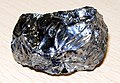 Silicon Croda
 -
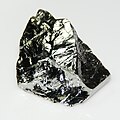 Polycrystalline germanium
 -
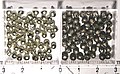 Sn Alpha Beta
 -
 Lead electrolytic and 1cm3 cube


Ad. Transform your health with W8MD Weight Loss, Sleep & MedSpa

Tired of being overweight?
Special offer:
Budget GLP-1 weight loss medications
- Semaglutide starting from $29.99/week and up with insurance for visit of $59.99 and up per week self pay.
- Tirzepatide starting from $45.00/week and up (dose dependent) or $69.99/week and up self pay
✔ Same-week appointments, evenings & weekends
Learn more:
- GLP-1 weight loss clinic NYC
- W8MD's NYC medical weight loss
- W8MD Philadelphia GLP-1 shots
- Philadelphia GLP-1 injections
- Affordable GLP-1 shots NYC
|
WikiMD Medical Encyclopedia |
Medical Disclaimer: WikiMD is for informational purposes only and is not a substitute for professional medical advice. Content may be inaccurate or outdated and should not be used for diagnosis or treatment. Always consult your healthcare provider for medical decisions. Verify information with trusted sources such as CDC.gov and NIH.gov. By using this site, you agree that WikiMD is not liable for any outcomes related to its content. See full disclaimer.
Credits:Most images are courtesy of Wikimedia commons, and templates, categories Wikipedia, licensed under CC BY SA or similar.
Translate this page: - East Asian
中文,
日本,
한국어,
South Asian
हिन्दी,
தமிழ்,
తెలుగు,
Urdu,
ಕನ್ನಡ,
Southeast Asian
Indonesian,
Vietnamese,
Thai,
မြန်မာဘာသာ,
বাংলা
European
español,
Deutsch,
français,
Greek,
português do Brasil,
polski,
română,
русский,
Nederlands,
norsk,
svenska,
suomi,
Italian
Middle Eastern & African
عربى,
Turkish,
Persian,
Hebrew,
Afrikaans,
isiZulu,
Kiswahili,
Other
Bulgarian,
Hungarian,
Czech,
Swedish,
മലയാളം,
मराठी,
ਪੰਜਾਬੀ,
ગુજરાતી,
Portuguese,
Ukrainian
