Counterculture of the 1960s
Counterculture of the 1960s was a cultural phenomenon that developed first in the United States and the United Kingdom, and then spread throughout much of the Western world between the early 1960s and the mid-1970s. This movement marked an era of change with its distinct cultural and political divergence from the mainstream. This included the rise of rock music, the introduction of innovative new art forms, and the popularization of the hippie ethos.
Origins[edit]
The counterculture of the 1960s was primarily a response to the perceived social, political, and cultural injustices of the time. It was influenced by the Beat Generation, who were known for their rejection of societal norms and their embrace of non-Western religions like Buddhism and Hinduism. The counterculture also drew inspiration from the Civil Rights Movement, which fought against racial segregation and discrimination.
Characteristics[edit]
The counterculture was characterized by anti-establishment views and the promotion of individual freedom. The movement was marked by a rejection of traditional values and norms, and a desire for social and political change. This was often expressed through music, art, and fashion, as well as through protests and demonstrations.
Music[edit]
Music was a significant part of the counterculture, with genres like rock, folk, and psychedelic becoming popular. Bands like The Beatles, The Rolling Stones, and The Grateful Dead were influential in shaping the musical landscape of the era.
Art[edit]
Art in the counterculture was characterized by its experimental nature and its rejection of traditional artistic conventions. This was seen in the rise of pop art, conceptual art, and performance art.
Fashion[edit]
Fashion during the counterculture was marked by a move away from the conservative styles of the 1950s. Instead, people embraced a more casual and eclectic style, often inspired by non-Western cultures. This included the popularization of the hippie look, which often featured long hair, bell-bottom jeans, and tie-dye clothing.
Impact[edit]
The counterculture of the 1960s had a significant impact on society, influencing music, art, and fashion for decades to come. It also played a role in the advancement of civil rights, women's rights, and gay rights. However, the movement also faced criticism for its perceived lack of direction and its association with drug use and anti-social behavior.
This 1960s related article is a stub. You can help WikiMD by expanding it.

-
 Peace symbol
 -
 Operation Crossroads Baker
 -
 Mario Savio
 -
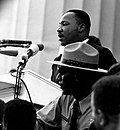 Martin Luther King - March on Washington
 -
 Family watching television 1958
 -
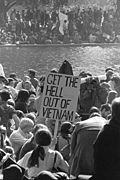 Vietnam War protestors at the March on the Pentagon
 -
 London's Carnaby Street, 1966
 -
 Oz 31 cover
 -
 Beauvoir Sartre - Che Guevara - 1960 - Cuba
 -
 Aoki at a Panther Rally


.jpg)
Ad. Transform your health with W8MD Weight Loss, Sleep & MedSpa

Tired of being overweight?
Special offer:
Budget GLP-1 weight loss medications
- Semaglutide starting from $29.99/week and up with insurance for visit of $59.99 and up per week self pay.
- Tirzepatide starting from $45.00/week and up (dose dependent) or $69.99/week and up self pay
✔ Same-week appointments, evenings & weekends
Learn more:
- GLP-1 weight loss clinic NYC
- W8MD's NYC medical weight loss
- W8MD Philadelphia GLP-1 shots
- Philadelphia GLP-1 injections
- Affordable GLP-1 shots NYC
|
WikiMD Medical Encyclopedia |
Medical Disclaimer: WikiMD is for informational purposes only and is not a substitute for professional medical advice. Content may be inaccurate or outdated and should not be used for diagnosis or treatment. Always consult your healthcare provider for medical decisions. Verify information with trusted sources such as CDC.gov and NIH.gov. By using this site, you agree that WikiMD is not liable for any outcomes related to its content. See full disclaimer.
Credits:Most images are courtesy of Wikimedia commons, and templates, categories Wikipedia, licensed under CC BY SA or similar.
Translate this page: - East Asian
中文,
日本,
한국어,
South Asian
हिन्दी,
தமிழ்,
తెలుగు,
Urdu,
ಕನ್ನಡ,
Southeast Asian
Indonesian,
Vietnamese,
Thai,
မြန်မာဘာသာ,
বাংলা
European
español,
Deutsch,
français,
Greek,
português do Brasil,
polski,
română,
русский,
Nederlands,
norsk,
svenska,
suomi,
Italian
Middle Eastern & African
عربى,
Turkish,
Persian,
Hebrew,
Afrikaans,
isiZulu,
Kiswahili,
Other
Bulgarian,
Hungarian,
Czech,
Swedish,
മലയാളം,
मराठी,
ਪੰਜਾਬੀ,
ગુજરાતી,
Portuguese,
Ukrainian
