BLAST (biotechnology)
BLAST (biotechnology)
BLAST (Basic Local Alignment Search Tool) is a bioinformatics algorithm used in the field of molecular biology. It was developed by Stephen Altschul, Warren Gish, Webb Miller, Eugene Myers, and David J. Lipman at the National Institutes of Health (NIH).
Overview[edit]
BLAST is a powerful tool that allows researchers to compare a nucleotide sequence or protein sequence against databases of known sequences. This comparison allows the identification of homologous sequences, which can provide insights into the function and evolutionary history of the sequence in question.
Algorithm[edit]
The BLAST algorithm works by breaking the query sequence into a series of "words" of a fixed length. These words are then compared to the database sequences to identify matches. The algorithm then extends these matches to identify high-scoring pairs (HSPs). The HSPs are then used to generate an alignment score, which is used to rank the matches.
Applications[edit]
BLAST is widely used in genomics and proteomics research. It is a critical tool for identifying gene and protein sequences in newly sequenced genomes. It is also used in phylogenetics to identify homologous sequences and construct phylogenetic trees.
See also[edit]
References[edit]
<references />

BLAST (biotechnology) gallery[edit]
-
 Query words
 -
 Extension process
 -
 Neighbor HSP
 -
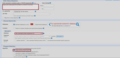 Blastp
 -
 Seqserv circos
 -
 Seqserv length dist
 -
 Fig. 6


Ad. Transform your life with W8MD's
GLP-1 weight loss injections special from $29.99 with insurance
|
WikiMD Medical Encyclopedia |
Medical Disclaimer: WikiMD is for informational purposes only and is not a substitute for professional medical advice. Content may be inaccurate or outdated and should not be used for diagnosis or treatment. Always consult your healthcare provider for medical decisions. Verify information with trusted sources such as CDC.gov and NIH.gov. By using this site, you agree that WikiMD is not liable for any outcomes related to its content. See full disclaimer.
Credits:Most images are courtesy of Wikimedia commons, and templates, categories Wikipedia, licensed under CC BY SA or similar.
Translate this page: - East Asian
中文,
日本,
한국어,
South Asian
हिन्दी,
தமிழ்,
తెలుగు,
Urdu,
ಕನ್ನಡ,
Southeast Asian
Indonesian,
Vietnamese,
Thai,
မြန်မာဘာသာ,
বাংলা
European
español,
Deutsch,
français,
Greek,
português do Brasil,
polski,
română,
русский,
Nederlands,
norsk,
svenska,
suomi,
Italian
Middle Eastern & African
عربى,
Turkish,
Persian,
Hebrew,
Afrikaans,
isiZulu,
Kiswahili,
Other
Bulgarian,
Hungarian,
Czech,
Swedish,
മലയാളം,
मराठी,
ਪੰਜਾਬੀ,
ગુજરાતી,
Portuguese,
Ukrainian
