Radon difluoride
Radon difluoride (RnF2) is a chemical compound consisting of one radon atom and two fluorine atoms. It is a member of the noble gas compounds, which are notable for their rarity and the inertness of the noble gases under standard conditions. Radon difluoride is of particular interest in the fields of inorganic chemistry and nuclear science due to the radioactive nature of radon.
Properties[edit]
Radon difluoride is a colorless gas under standard conditions. As with other noble gas compounds, it is relatively unstable and can decompose into its constituent elements. The compound is of interest primarily for its theoretical and experimental implications in the study of chemical bonding and the behavior of noble gases in chemical reactions.
Synthesis[edit]
The synthesis of radon difluoride involves the direct reaction of radon gas with fluorine gas under specific conditions. The reaction is highly controlled due to the radioactive nature of radon and the reactivity of fluorine. The process typically requires a low temperature and an inert atmosphere to prevent the decomposition of the product and to ensure the safety of the researchers.
Chemical Reactions[edit]
Radon difluoride can undergo further chemical reactions, although its reactivity is limited due to the stability of the Rn-F bond and the inert nature of radon. Studies on its reactivity help expand the understanding of noble gas chemistry and the potential for noble gases to form stable compounds under certain conditions.
Applications[edit]
The applications of radon difluoride are primarily academic, given the compound's instability and the radioactive hazard posed by radon. Research into radon difluoride and similar compounds can provide insights into the limits of chemical bonding and the potential for synthesizing new materials from noble gases.
Safety[edit]
Handling radon difluoride requires strict safety protocols due to the radioactive nature of radon and the chemical reactivity of fluorine. Safety measures include the use of shielded containment, appropriate ventilation, and monitoring for radiation exposure.
See Also[edit]

-
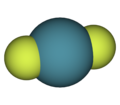 Radon difluoride CPK model

Ad. Transform your health with W8MD Weight Loss, Sleep & MedSpa

Tired of being overweight?
Special offer:
Budget GLP-1 weight loss medications
- Semaglutide starting from $29.99/week and up with insurance for visit of $59.99 and up per week self pay.
- Tirzepatide starting from $45.00/week and up (dose dependent) or $69.99/week and up self pay
✔ Same-week appointments, evenings & weekends
Learn more:
- GLP-1 weight loss clinic NYC
- W8MD's NYC medical weight loss
- W8MD Philadelphia GLP-1 shots
- Philadelphia GLP-1 injections
- Affordable GLP-1 shots NYC
|
WikiMD Medical Encyclopedia |
Medical Disclaimer: WikiMD is for informational purposes only and is not a substitute for professional medical advice. Content may be inaccurate or outdated and should not be used for diagnosis or treatment. Always consult your healthcare provider for medical decisions. Verify information with trusted sources such as CDC.gov and NIH.gov. By using this site, you agree that WikiMD is not liable for any outcomes related to its content. See full disclaimer.
Credits:Most images are courtesy of Wikimedia commons, and templates, categories Wikipedia, licensed under CC BY SA or similar.
Translate this page: - East Asian
中文,
日本,
한국어,
South Asian
हिन्दी,
தமிழ்,
తెలుగు,
Urdu,
ಕನ್ನಡ,
Southeast Asian
Indonesian,
Vietnamese,
Thai,
မြန်မာဘာသာ,
বাংলা
European
español,
Deutsch,
français,
Greek,
português do Brasil,
polski,
română,
русский,
Nederlands,
norsk,
svenska,
suomi,
Italian
Middle Eastern & African
عربى,
Turkish,
Persian,
Hebrew,
Afrikaans,
isiZulu,
Kiswahili,
Other
Bulgarian,
Hungarian,
Czech,
Swedish,
മലയാളം,
मराठी,
ਪੰਜਾਬੀ,
ગુજરાતી,
Portuguese,
Ukrainian
