Plutonium in the environment
Plutonium in the environment refers to the presence and effects of the radioactive chemical element Plutonium in various environmental contexts. Plutonium, a transuranic element, is primarily produced in nuclear reactors and has been used for both peaceful and military purposes. Its presence in the environment is largely due to human activities, such as nuclear weapons testing, nuclear accidents, and the disposal of nuclear waste.
Sources of Plutonium in the Environment[edit]
The primary sources of plutonium in the environment are nuclear weapons testing, nuclear power plants, and nuclear accidents.
Nuclear Weapons Testing[edit]
Nuclear weapons testing has been a significant source of plutonium in the environment. During the mid-20th century, many countries conducted atmospheric nuclear tests, which released large amounts of plutonium into the atmosphere. This plutonium can travel long distances in the atmosphere before settling to the ground, contaminating large areas.
Nuclear Power Plants[edit]
Nuclear power plants also contribute to the presence of plutonium in the environment. Plutonium is a byproduct of the nuclear fission process used in these plants. While most of the plutonium is contained within the nuclear fuel, small amounts can be released into the environment through the disposal of nuclear waste or during accidents.
Nuclear Accidents[edit]
Nuclear accidents, such as the Chernobyl disaster and the Fukushima Daiichi nuclear disaster, have resulted in significant releases of plutonium into the environment. These accidents can contaminate large areas and have long-lasting effects on the environment.
Effects of Plutonium in the Environment[edit]
Plutonium in the environment can have significant effects on both human health and the ecosystem.
Human Health[edit]
Plutonium is a radiation hazard due to its radioactive decay. If inhaled or ingested, plutonium can cause radiation sickness and increase the risk of cancer.
Ecosystem[edit]
Plutonium can also have detrimental effects on the ecosystem. It can contaminate soil and water, affecting plants and animals. The long half-life of plutonium means that it can remain in the environment for thousands of years, posing a long-term risk to ecosystems.
Mitigation and Cleanup[edit]
Efforts to mitigate the effects of plutonium in the environment include cleanup operations and regulations to limit the release of plutonium. Cleanup operations can involve the removal of contaminated soil or the containment of contaminated areas. Regulations can include limits on nuclear testing and the disposal of nuclear waste.
See Also[edit]

This article is a environment-related stub. You can help WikiMD by expanding it!

This article is a nuclear physics or atomic physics–related stub. You can help WikiMD by expanding it!
Plutonium in the environment[edit]
-
 Hanford N Reactor
 -
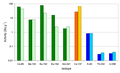 Trinity glass activity
 -
 Pu before and after Trinity
 -
 Fission bomb assembly methods
 -
 Cut drawing of an GPHS-RTG
 -
 Radioisotope thermoelectric generator plutonium pellet
 -
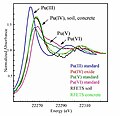 Pu XANES


Ad. Transform your life with W8MD's Budget GLP-1 injections from $29.99


W8MD offers a medical weight loss programs including NYC medical weight loss and Philadelphia medical weight loss offering:
- Budget GLP1 shots (generic and brand names) such as
- Learn more: Budget GLP1 weight loss injections NYC & Philadelphia GLP1 weight loss shots
- Most insurances accepted
- Budget GLP1 weight loss injections such as Semaglutide starting from $29.99/week and $45.00/week (Tirzepatide) with insurance.
NYC weight loss doctor appointmentsNYC weight loss doctor appointments
Start your NYC weight loss journey today at our:
- Call 718-946-5500 for NYC or 215-676-2334 for Philadelphia
- Tags:
GLP1 weight loss doctor NYC, Zepbound NYC, Budget GLP1 weight loss injections, Philadelphia medical weight loss, Wegovy NYC, Brooklyn weight loss, Wegovy NYC, Budget GLP1 shots NYC


|
WikiMD's Wellness Encyclopedia |
| Let Food Be Thy Medicine Medicine Thy Food - Hippocrates |
Medical Disclaimer: WikiMD is not a substitute for professional medical advice. The information on WikiMD is provided as an information resource only, may be incorrect, outdated or misleading, and is not to be used or relied on for any diagnostic or treatment purposes. Please consult your health care provider before making any healthcare decisions or for guidance about a specific medical condition. WikiMD expressly disclaims responsibility, and shall have no liability, for any damages, loss, injury, or liability whatsoever suffered as a result of your reliance on the information contained in this site. By visiting this site you agree to the foregoing terms and conditions, which may from time to time be changed or supplemented by WikiMD. If you do not agree to the foregoing terms and conditions, you should not enter or use this site. See full disclaimer.
Credits:Most images are courtesy of Wikimedia commons, and templates, categories Wikipedia, licensed under CC BY SA or similar.
Translate this page: - East Asian
中文,
日本,
한국어,
South Asian
हिन्दी,
தமிழ்,
తెలుగు,
Urdu,
ಕನ್ನಡ,
Southeast Asian
Indonesian,
Vietnamese,
Thai,
မြန်မာဘာသာ,
বাংলা
European
español,
Deutsch,
français,
Greek,
português do Brasil,
polski,
română,
русский,
Nederlands,
norsk,
svenska,
suomi,
Italian
Middle Eastern & African
عربى,
Turkish,
Persian,
Hebrew,
Afrikaans,
isiZulu,
Kiswahili,
Other
Bulgarian,
Hungarian,
Czech,
Swedish,
മലയാളം,
मराठी,
ਪੰਜਾਬੀ,
ગુજરાતી,
Portuguese,
Ukrainian
