Serine/arginine-rich splicing factor 1
Serine/arginine-rich splicing factor 1 (SRSF1), also known as ASF/SF2, is a protein that in humans is encoded by the SRSF1 gene. It is a member of the Serine/arginine-rich (SR) protein family, which is involved in the regulation of alternative splicing of pre-mRNA. SRSF1 plays a crucial role in the splicing process by recognizing the splice sites in pre-mRNA and facilitating the assembly of the spliceosome, a complex necessary for the removal of introns from pre-mRNA.
Function[edit]
SRSF1 is involved in the regulation of both constitutive splicing and alternative splicing. It interacts with both the exons and introns of pre-mRNA, recognizing specific nucleotide sequences through its RNA recognition motifs (RRMs). This interaction is essential for the determination of splice site selection and the regulation of alternative splicing, a process that allows a single gene to produce multiple protein isoforms. Additionally, SRSF1 is implicated in various aspects of mRNA metabolism, including mRNA export from the nucleus, mRNA stability, and translation.
Clinical Significance[edit]
Alterations in the expression levels or mutations in the SRSF1 gene have been associated with several human diseases, including cancer. Overexpression of SRSF1 has been observed in various types of cancer, where it can promote tumorigenesis by influencing the alternative splicing of pre-mRNAs in a way that favors the production of oncogenic protein isoforms. Furthermore, SRSF1 has been implicated in the response to anticancer drugs, suggesting its potential as a therapeutic target.
Structure[edit]
The SRSF1 protein contains two RNA recognition motifs (RRMs) at its N-terminus and a rich domain of serine/arginine (RS domain) at its C-terminus. The RRMs are responsible for binding RNA, while the RS domain is involved in protein-protein interactions necessary for the assembly of the spliceosome and the regulation of splicing.
Interaction[edit]
SRSF1 interacts with a variety of proteins and RNA molecules involved in splicing. It is a component of the spliceosomal complex and interacts with other splicing factors, such as U1 small nuclear ribonucleoprotein and U2 small nuclear ribonucleoprotein, to facilitate the splicing process. Additionally, SRSF1 can interact with other SR proteins, forming heterodimers that influence splice site selection and splicing regulation.
See Also[edit]
References[edit]
<references />

-
 RRM2 domain
 -
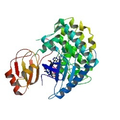 ASF-SF2


Ad. Transform your health with W8MD Weight Loss, Sleep & MedSpa

Tired of being overweight?
Special offer:
Budget GLP-1 weight loss medications
- Semaglutide starting from $29.99/week and up with insurance for visit of $59.99 and up per week self pay.
- Tirzepatide starting from $45.00/week and up (dose dependent) or $69.99/week and up self pay
✔ Same-week appointments, evenings & weekends
Learn more:
- GLP-1 weight loss clinic NYC
- W8MD's NYC medical weight loss
- W8MD Philadelphia GLP-1 shots
- Philadelphia GLP-1 injections
- Affordable GLP-1 shots NYC
|
WikiMD Medical Encyclopedia |
Medical Disclaimer: WikiMD is for informational purposes only and is not a substitute for professional medical advice. Content may be inaccurate or outdated and should not be used for diagnosis or treatment. Always consult your healthcare provider for medical decisions. Verify information with trusted sources such as CDC.gov and NIH.gov. By using this site, you agree that WikiMD is not liable for any outcomes related to its content. See full disclaimer.
Credits:Most images are courtesy of Wikimedia commons, and templates, categories Wikipedia, licensed under CC BY SA or similar.
Translate this page: - East Asian
中文,
日本,
한국어,
South Asian
हिन्दी,
தமிழ்,
తెలుగు,
Urdu,
ಕನ್ನಡ,
Southeast Asian
Indonesian,
Vietnamese,
Thai,
မြန်မာဘာသာ,
বাংলা
European
español,
Deutsch,
français,
Greek,
português do Brasil,
polski,
română,
русский,
Nederlands,
norsk,
svenska,
suomi,
Italian
Middle Eastern & African
عربى,
Turkish,
Persian,
Hebrew,
Afrikaans,
isiZulu,
Kiswahili,
Other
Bulgarian,
Hungarian,
Czech,
Swedish,
മലയാളം,
मराठी,
ਪੰਜਾਬੀ,
ગુજરાતી,
Portuguese,
Ukrainian
