BOM (psychedelic)
BOM (psychedelic)
BOM, also known as 2,5-dimethoxy-4-bromoamphetamine, is a psychedelic drug and a substituted amphetamine. It is part of the DOB family of psychedelic compounds, first synthesized by Alexander Shulgin.
Chemistry[edit]
BOM is a brominated compound, derived from amphetamine. Its full chemical name is 2,5-dimethoxy-4-bromoamphetamine. The drug has structural similarities to other psychedelic amphetamines such as DOB and DOC.
Pharmacology[edit]
BOM acts as a serotonin receptor agonist. It has a high affinity for the 5-HT2A and 5-HT2B receptors, which are thought to be primarily responsible for its psychedelic effects. The exact mechanism of action is not fully understood, but it is believed to involve a complex interplay of neurotransmitter systems.
Effects[edit]
The effects of BOM are similar to those of other psychedelic amphetamines. These can include hallucinations, altered perception of time and space, enhanced introspection, and emotional intensification. The duration of effects can vary widely depending on dose, but typically range from 6 to 12 hours.
Risks[edit]
As with all psychedelic drugs, BOM carries risks. These can include psychological distress, dangerous behavior due to altered perceptions, and potential for abuse. There is also a risk of physical harm due to the drug's amphetamine base, including cardiovascular issues and neurotoxicity.
Legal Status[edit]
The legal status of BOM varies by country. In many places, it is a controlled substance, making its manufacture, distribution, and use illegal.
See Also[edit]
References[edit]
<references />

-
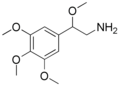 3,4,5,beta-tetramethoxyphenethylamine
 -
 BOM-3d-sticks


Ad. Transform your life with W8MD's
GLP-1 weight loss injections special from $29.99 with insurance
|
WikiMD Medical Encyclopedia |
Medical Disclaimer: WikiMD is for informational purposes only and is not a substitute for professional medical advice. Content may be inaccurate or outdated and should not be used for diagnosis or treatment. Always consult your healthcare provider for medical decisions. Verify information with trusted sources such as CDC.gov and NIH.gov. By using this site, you agree that WikiMD is not liable for any outcomes related to its content. See full disclaimer.
Credits:Most images are courtesy of Wikimedia commons, and templates, categories Wikipedia, licensed under CC BY SA or similar.
Translate this page: - East Asian
中文,
日本,
한국어,
South Asian
हिन्दी,
தமிழ்,
తెలుగు,
Urdu,
ಕನ್ನಡ,
Southeast Asian
Indonesian,
Vietnamese,
Thai,
မြန်မာဘာသာ,
বাংলা
European
español,
Deutsch,
français,
Greek,
português do Brasil,
polski,
română,
русский,
Nederlands,
norsk,
svenska,
suomi,
Italian
Middle Eastern & African
عربى,
Turkish,
Persian,
Hebrew,
Afrikaans,
isiZulu,
Kiswahili,
Other
Bulgarian,
Hungarian,
Czech,
Swedish,
മലയാളം,
मराठी,
ਪੰਜਾਬੀ,
ગુજરાતી,
Portuguese,
Ukrainian
