Paris buns
A type of sweet bun originating from Scotland
Paris Buns[edit]
.JPG)
A Paris bun is a type of sweet bun that is traditionally associated with Scotland. Despite its name, the Paris bun does not have any direct connection to Paris, France. It is a popular treat in Scottish bakeries and is known for its light, fluffy texture and sweet flavor.
Ingredients and Preparation[edit]
The main ingredients of a Paris bun include flour, sugar, butter, eggs, and baking powder. Some variations may include milk or buttermilk to enhance the texture. The dough is typically enriched with currants or sultanas, which add a fruity sweetness to the bun.
To prepare a Paris bun, the dry ingredients are first mixed together, followed by the addition of the wet ingredients to form a dough. The dough is then shaped into individual buns and baked until golden brown. The result is a soft, sweet bun with a slightly crisp exterior.
Cultural Significance[edit]
Paris buns are a staple in Scottish bakeries and are often enjoyed as a snack or a dessert. They are sometimes served with tea or coffee and can be found in various sizes, from small individual buns to larger, shareable versions.
Variations[edit]
While the traditional Paris bun is plain, some variations include a glaze or icing on top. Others might incorporate different types of dried fruit or spices to add variety to the flavor.
Related pages[edit]
-
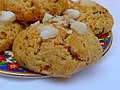 Paris buns 25 April 2020
Ad. Transform your life with W8MD's
GLP-1 weight loss injections special from $29.99 with insurance
|
WikiMD Medical Encyclopedia |
Medical Disclaimer: WikiMD is for informational purposes only and is not a substitute for professional medical advice. Content may be inaccurate or outdated and should not be used for diagnosis or treatment. Always consult your healthcare provider for medical decisions. Verify information with trusted sources such as CDC.gov and NIH.gov. By using this site, you agree that WikiMD is not liable for any outcomes related to its content. See full disclaimer.
Credits:Most images are courtesy of Wikimedia commons, and templates, categories Wikipedia, licensed under CC BY SA or similar.
Translate this page: - East Asian
中文,
日本,
한국어,
South Asian
हिन्दी,
தமிழ்,
తెలుగు,
Urdu,
ಕನ್ನಡ,
Southeast Asian
Indonesian,
Vietnamese,
Thai,
မြန်မာဘာသာ,
বাংলা
European
español,
Deutsch,
français,
Greek,
português do Brasil,
polski,
română,
русский,
Nederlands,
norsk,
svenska,
suomi,
Italian
Middle Eastern & African
عربى,
Turkish,
Persian,
Hebrew,
Afrikaans,
isiZulu,
Kiswahili,
Other
Bulgarian,
Hungarian,
Czech,
Swedish,
മലയാളം,
मराठी,
ਪੰਜਾਬੀ,
ગુજરાતી,
Portuguese,
Ukrainian
