Balinese cuisine
Balinese cuisine is a traditional food culture originating from the Island of Bali, Indonesia. It is renowned for its distinctive use of ingredients, preparation methods, and presentation.
Ingredients[edit]
The primary ingredients used in Balinese cuisine include rice, vegetables, meat, and seafood. These are often combined with a variety of spices and herbs such as turmeric, galangal, chili peppers, and lemongrass, which give the dishes their unique flavors.
Dishes[edit]
Some of the most popular dishes in Balinese cuisine include Babi Guling (spit-roasted pig), Bebek Betutu (slow-cooked duck), and Lawar (a mix of vegetables, meat and spices). Another staple is Nasi Goreng, a fried rice dish often served with a variety of accompaniments.
Cooking Methods[edit]
Balinese cuisine utilizes a variety of cooking methods. These include grilling, roasting, steaming, and boiling. Many dishes are slow-cooked to allow the flavors to fully develop.
Cultural Significance[edit]
Food plays a significant role in Balinese culture. It is not only seen as a source of nourishment but also as a way to bring people together and to offer to the gods in religious ceremonies.
See Also[edit]
References[edit]
<references />

This article is a Indonesian cuisine-related stub. You can help WikiMD by expanding it!

Balinese_cuisine[edit]
-
 Bali cuisine
 -
 Vegetable Market
 -
 Warung of Bali
 -
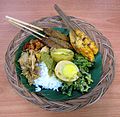 Nasi Campur Bali Sate Lilit
 -
 Making Basa Gede
 -
 Soto Babi Bali
 -
 Preparing The Feast
 -
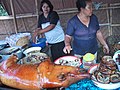 Babi Guling Roast suckling pig

.jpg)


Ad. Transform your life with W8MD's
GLP-1 weight loss injections special from $29.99 with insurance
|
WikiMD Medical Encyclopedia |
Medical Disclaimer: WikiMD is for informational purposes only and is not a substitute for professional medical advice. Content may be inaccurate or outdated and should not be used for diagnosis or treatment. Always consult your healthcare provider for medical decisions. Verify information with trusted sources such as CDC.gov and NIH.gov. By using this site, you agree that WikiMD is not liable for any outcomes related to its content. See full disclaimer.
Credits:Most images are courtesy of Wikimedia commons, and templates, categories Wikipedia, licensed under CC BY SA or similar.
Translate this page: - East Asian
中文,
日本,
한국어,
South Asian
हिन्दी,
தமிழ்,
తెలుగు,
Urdu,
ಕನ್ನಡ,
Southeast Asian
Indonesian,
Vietnamese,
Thai,
မြန်မာဘာသာ,
বাংলা
European
español,
Deutsch,
français,
Greek,
português do Brasil,
polski,
română,
русский,
Nederlands,
norsk,
svenska,
suomi,
Italian
Middle Eastern & African
عربى,
Turkish,
Persian,
Hebrew,
Afrikaans,
isiZulu,
Kiswahili,
Other
Bulgarian,
Hungarian,
Czech,
Swedish,
മലയാളം,
मराठी,
ਪੰਜਾਬੀ,
ગુજરાતી,
Portuguese,
Ukrainian
