Bread in culture
Bread in Culture
Bread, a staple food made primarily from flour, water, and yeast, has been a fundamental part of human diet and culture for thousands of years. Its significance extends beyond mere sustenance; bread is deeply embedded in the rituals, traditions, and social fabric of many societies around the globe.
History[edit]
The history of bread can be traced back to the Neolithic era, when the first agricultural societies began cultivating grains. The earliest forms of bread were likely flatbreads, which did not require yeast for leavening. The discovery of fermenting grains to produce leavened bread marked a significant technological advancement. By the time of the Egyptian civilization, bread had become a cornerstone of daily life, with dozens of varieties being produced.
Cultural Significance[edit]
Bread holds profound cultural significance in many traditions. In Judaism, for example, bread is central to the observance of Shabbat and the Passover holiday, symbolizing freedom and divine provision. The Christian ritual of the Eucharist uses bread to represent the body of Christ, underscoring its spiritual importance. In Islam, bread is considered a gift from Allah, and wasting it is frowned upon.
Symbolism[edit]
Bread often symbolizes life, nourishment, and prosperity. Its presence or absence can signify abundance or famine, making it a powerful symbol in religious and secular contexts alike. The phrase "breaking bread" is commonly used to denote a sense of community and fellowship, highlighting bread's role in bringing people together.
Bread in Rituals and Celebrations[edit]
Many cultures have specific rituals and celebrations centered around bread. For instance, the Russian tradition of welcoming guests with bread and salt signifies hospitality and friendship. In some Slavic cultures, bread and salt are also presented at weddings as symbols of health, prosperity, and long life.
Varieties and Innovations[edit]
The diversity of bread types reflects the cultural, geographical, and technological influences of different societies. From the baguettes of France to the naan of India, each variety carries with it a history and tradition. Innovations in bread-making continue to evolve, with artisanal bakers experimenting with ingredients, fermentation processes, and baking techniques to create new and unique products.
Contemporary Issues[edit]
Today, bread is at the center of many contemporary issues, including health concerns related to gluten and carbohydrates, and the environmental impact of grain cultivation. Despite these challenges, bread remains a universal food, celebrated for its simplicity, versatility, and the way it continues to bring people together.

-
 Christ and his Disciples in Emmaus
 -
 Essene Bread Spelt Sproud cut
 -
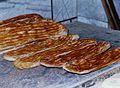 Iranian Bread
 -
 Classic white Mantou
 -
 Aloo Paratha with Butter from India
 -
 French bread
 -
 Pita Bread
 -
 Guadalupe Rodrigues Rios en panadería Ramones


Ad. Transform your life with W8MD's
GLP-1 weight loss injections special from $29.99 with insurance
|
WikiMD Medical Encyclopedia |
Medical Disclaimer: WikiMD is for informational purposes only and is not a substitute for professional medical advice. Content may be inaccurate or outdated and should not be used for diagnosis or treatment. Always consult your healthcare provider for medical decisions. Verify information with trusted sources such as CDC.gov and NIH.gov. By using this site, you agree that WikiMD is not liable for any outcomes related to its content. See full disclaimer.
Credits:Most images are courtesy of Wikimedia commons, and templates, categories Wikipedia, licensed under CC BY SA or similar.
Translate this page: - East Asian
中文,
日本,
한국어,
South Asian
हिन्दी,
தமிழ்,
తెలుగు,
Urdu,
ಕನ್ನಡ,
Southeast Asian
Indonesian,
Vietnamese,
Thai,
မြန်မာဘာသာ,
বাংলা
European
español,
Deutsch,
français,
Greek,
português do Brasil,
polski,
română,
русский,
Nederlands,
norsk,
svenska,
suomi,
Italian
Middle Eastern & African
عربى,
Turkish,
Persian,
Hebrew,
Afrikaans,
isiZulu,
Kiswahili,
Other
Bulgarian,
Hungarian,
Czech,
Swedish,
മലയാളം,
मराठी,
ਪੰਜਾਬੀ,
ગુજરાતી,
Portuguese,
Ukrainian
