Water purification
Water purification is the process of removing undesirable chemicals, biological contaminants, suspended solids, and gases from water. The goal is to produce water fit for specific purposes. Most water is purified and disinfected for human consumption (drinking water), but water purification may also be carried out for a variety of other purposes, including medical, pharmacological, chemical, and industrial applications. The methods used include physical processes such as filtration, sedimentation, and distillation; biological processes such as slow sand filters or biologically active carbon; chemical processes such as flocculation and chlorination; and the use of electromagnetic radiation such as ultraviolet light.
Methods[edit]
Water purification methods vary widely, and the method chosen often depends on the nature of the water source and the intended use of the water.
Physical processes[edit]
Physical processes include sedimentation, filtration, and distillation. Sedimentation involves the settling of suspended particles, often after the addition of a chemical flocculant. Filtration can be through granular media, such as sand or activated carbon, or through membranes, such as those used in reverse osmosis. Distillation involves boiling the water and then condensing the steam.
Biological processes[edit]
Biological processes use organisms to remove contaminants. Slow sand filters rely on biological activity in a layer of sand to filter out particles and microorganisms. Biologically active carbon filters use a similar process, but with activated carbon as the medium.
Chemical processes[edit]
Chemical processes include flocculation, in which a chemical is added that causes particles to clump together and settle out of the water, and chlorination, which kills microorganisms.
Electromagnetic radiation[edit]
Ultraviolet light can be used to kill microorganisms in water. This is often used in combination with other purification methods.
Health effects[edit]
The purification of water is a crucial step in preventing waterborne diseases. Some waterborne diseases include cholera, typhoid, and dysentery.
Environmental impact[edit]
Water purification processes can have an environmental impact, particularly in terms of the energy used and the disposal of residual sludge.
See also[edit]

This article is a water supply–related stub. You can help WikiMD by expanding it!
-
 Illustration of a typical drinking water treatment process
 -
 Station for complex water treatment SKO-10K
 -
 Rapid sand filter EPA
 -
 Backwashing demo at a water filtration plant
 -
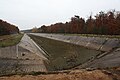 Vsakovací nádrže umělé infiltrace v ÚV Káraný
 -
 Slow sand filter profile
 -
 Chemical pumps at water purification plant
 -
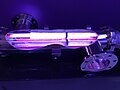 Cutaway model of UV disinfection unit used in NEWater water treatment plants
 -
 Detektor znečištění pstruh duhový ÚV Káraný
 -
 Jakob Ziegler 1799 Bemerkungen über gemeines Wasser detail
 -
 Snow cholera map 1
 -
 Manual Control Chlorinator


Ad. Transform your life with W8MD's
GLP-1 weight loss injections special from $29.99


W8MD Medical Weight Loss, Sleep and Medspa offers physician-supervised medical weight loss programs: NYC medical weight loss Philadelphia medical weight loss
Affordable GLP-1 Weight Loss ShotsAffordable GLP-1 Weight Loss Shots
Budget GLP-1 injections NYC (insurance & self-pay options) Popular treatments:
- Semaglutide starting from $29.99/week
- Tirzepatide starting from $45.00/week
✔ Most insurances accepted for visits ✔ Prior authorization support when eligible
Start your physician weight loss NYC journey today:
📍 NYC: Brooklyn weight loss center 📍 Philadelphia: Philadelphia weight loss center
📞 Call: 718-946-5500 (NYC) | 215-676-2334 (Philadelphia)
Tags: Affordable GLP1 weight loss NYC, Wegovy NYC, Zepbound NYC, Philadelphia medical weight loss


|
WikiMD Medical Encyclopedia |
Medical Disclaimer: WikiMD is not a substitute for professional medical advice. The information on WikiMD is provided as an information resource only, may be incorrect, outdated or misleading, and is not to be used or relied on for any diagnostic or treatment purposes. Please consult your health care provider before making any healthcare decisions or for guidance about a specific medical condition. WikiMD expressly disclaims responsibility, and shall have no liability, for any damages, loss, injury, or liability whatsoever suffered as a result of your reliance on the information contained in this site. By visiting this site you agree to the foregoing terms and conditions, which may from time to time be changed or supplemented by WikiMD. If you do not agree to the foregoing terms and conditions, you should not enter or use this site. See full disclaimer.
Credits:Most images are courtesy of Wikimedia commons, and templates, categories Wikipedia, licensed under CC BY SA or similar.
Translate this page: - East Asian
中文,
日本,
한국어,
South Asian
हिन्दी,
தமிழ்,
తెలుగు,
Urdu,
ಕನ್ನಡ,
Southeast Asian
Indonesian,
Vietnamese,
Thai,
မြန်မာဘာသာ,
বাংলা
European
español,
Deutsch,
français,
Greek,
português do Brasil,
polski,
română,
русский,
Nederlands,
norsk,
svenska,
suomi,
Italian
Middle Eastern & African
عربى,
Turkish,
Persian,
Hebrew,
Afrikaans,
isiZulu,
Kiswahili,
Other
Bulgarian,
Hungarian,
Czech,
Swedish,
മലയാളം,
मराठी,
ਪੰਜਾਬੀ,
ગુજરાતી,
Portuguese,
Ukrainian
