Currant bun
Currant Bun[edit]
The Currant Bun is a type of sweet pastry that is popular in many countries. It is typically made with a rich dough that is filled with currants, a small dried fruit similar to raisins. Currant buns are often enjoyed as a breakfast or snack item, and they can be found in bakeries and grocery stores worldwide.
History[edit]
The exact origins of the currant bun are unclear, but it is believed to have originated in England during the 17th century. The bun gained popularity in the 18th and 19th centuries, particularly in London, where it became a staple in tea rooms and coffee houses. Today, currant buns are enjoyed in various forms and variations across different cultures.
Ingredients[edit]
The main ingredients used in making currant buns include flour, sugar, butter, yeast, milk, eggs, and currants. Some recipes may also include additional flavorings such as cinnamon or nutmeg. The dough is typically made by combining the dry ingredients, adding the wet ingredients, and then kneading the mixture until it forms a smooth and elastic dough. The currants are then incorporated into the dough before it is shaped into individual buns.
Preparation[edit]
To prepare currant buns, the dough is first allowed to rise until it doubles in size. Once risen, the dough is divided into equal portions and shaped into round buns. These buns are then placed on a baking sheet and left to rise again for a short period. Finally, the buns are baked in a preheated oven until they turn golden brown and have a slightly crispy exterior.
Serving and Variations[edit]
Currant buns are typically served fresh and warm, either plain or with a spread of butter. They can also be enjoyed with jam or other sweet spreads. In some variations, a cross-shaped icing is added on top of the buns, creating what is known as a "hot cross bun." This variation is particularly popular during the Easter season in many countries.
Cultural Significance[edit]
The currant bun holds cultural significance in various countries. In England, for example, it is associated with traditional tea time and is often enjoyed with a cup of tea. In other countries, such as Australia and New Zealand, currant buns are commonly consumed during breakfast or as a snack. The bun's rich history and widespread popularity have made it a beloved pastry in many cultures.
See Also[edit]
References[edit]
<references />
-
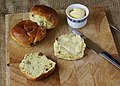 Currant bun

Ad. Transform your health with W8MD Weight Loss, Sleep & MedSpa

Tired of being overweight?
Special offer:
Budget GLP-1 weight loss medications
- Semaglutide starting from $29.99/week and up with insurance for visit of $59.99 and up per week self pay.
- Tirzepatide starting from $45.00/week and up (dose dependent) or $69.99/week and up self pay
✔ Same-week appointments, evenings & weekends
Learn more:
- GLP-1 weight loss clinic NYC
- W8MD's NYC medical weight loss
- W8MD Philadelphia GLP-1 shots
- Philadelphia GLP-1 injections
- Affordable GLP-1 shots NYC
|
WikiMD Medical Encyclopedia |
Medical Disclaimer: WikiMD is for informational purposes only and is not a substitute for professional medical advice. Content may be inaccurate or outdated and should not be used for diagnosis or treatment. Always consult your healthcare provider for medical decisions. Verify information with trusted sources such as CDC.gov and NIH.gov. By using this site, you agree that WikiMD is not liable for any outcomes related to its content. See full disclaimer.
Credits:Most images are courtesy of Wikimedia commons, and templates, categories Wikipedia, licensed under CC BY SA or similar.
Translate this page: - East Asian
中文,
日本,
한국어,
South Asian
हिन्दी,
தமிழ்,
తెలుగు,
Urdu,
ಕನ್ನಡ,
Southeast Asian
Indonesian,
Vietnamese,
Thai,
မြန်မာဘာသာ,
বাংলা
European
español,
Deutsch,
français,
Greek,
português do Brasil,
polski,
română,
русский,
Nederlands,
norsk,
svenska,
suomi,
Italian
Middle Eastern & African
عربى,
Turkish,
Persian,
Hebrew,
Afrikaans,
isiZulu,
Kiswahili,
Other
Bulgarian,
Hungarian,
Czech,
Swedish,
മലയാളം,
मराठी,
ਪੰਜਾਬੀ,
ગુજરાતી,
Portuguese,
Ukrainian
