Prosopagnosia
Prosopagnosia
Prosopagnosia, also known as face blindness, is a cognitive disorder characterized by an inability to recognize faces. This condition can be congenital or acquired due to brain injury. Individuals with prosopagnosia may have difficulty recognizing familiar faces, including their own, and may rely on other cues such as voice, clothing, or distinctive features to identify people.
Epidemiology
Prosopagnosia affects approximately 2% of the general population. It can occur in both children and adults, and there is evidence to suggest a genetic component, as it sometimes runs in families.
Etiology
Prosopagnosia can be classified into two main types:
- Congenital Prosopagnosia: This form is present from birth and is not associated with any brain damage. It is believed to have a genetic basis.
- Acquired Prosopagnosia: This form occurs as a result of brain injury, such as a stroke, traumatic brain injury, or neurodegenerative diseases. It is often associated with damage to the fusiform gyrus, a region of the brain involved in facial recognition.
Pathophysiology
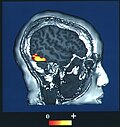
The fusiform gyrus, located in the temporal lobe of the brain, plays a crucial role in facial recognition. Damage to this area can disrupt the ability to process and recognize faces. In congenital prosopagnosia, the exact neural mechanisms are not fully understood, but it is thought to involve atypical development of the neural networks responsible for face processing.
Clinical Features
Individuals with prosopagnosia may exhibit the following symptoms:
- Difficulty recognizing familiar faces, including family members and friends.
- Inability to recognize one's own face in photographs or mirrors.
- Reliance on non-facial cues for identification, such as voice, hairstyle, or clothing.
- Social anxiety or avoidance due to difficulties in social interactions.
Diagnosis
Diagnosis of prosopagnosia typically involves a combination of clinical assessment and neuropsychological testing. Tests may include:
- Face recognition tests, where individuals are asked to identify or match faces.
- Memory tests to rule out general memory deficits.
- Brain imaging studies, such as MRI or CT scan, to identify any structural abnormalities.
Management
There is currently no cure for prosopagnosia, but several strategies can help individuals cope with the condition:
- Use of alternative identification strategies, such as focusing on distinctive features or using verbal descriptions.
- Social skills training to improve confidence in social interactions.
- Technological aids, such as facial recognition software, to assist in identifying people.
Prognosis
The prognosis for individuals with prosopagnosia varies depending on the type and severity of the condition. Those with congenital prosopagnosia may develop compensatory strategies over time, while those with acquired prosopagnosia may experience improvement if the underlying cause is treatable.
See Also
External Links
- [Prosopagnosia Research Centers]
- [Support Groups for Face Blindness]
-
 Prosopagnosia

Ad. Transform your life with W8MD's
GLP-1 weight loss injections special from $29.99 with insurance
|
WikiMD Medical Encyclopedia |
Medical Disclaimer: WikiMD is for informational purposes only and is not a substitute for professional medical advice. Content may be inaccurate or outdated and should not be used for diagnosis or treatment. Always consult your healthcare provider for medical decisions. Verify information with trusted sources such as CDC.gov and NIH.gov. By using this site, you agree that WikiMD is not liable for any outcomes related to its content. See full disclaimer.
Credits:Most images are courtesy of Wikimedia commons, and templates, categories Wikipedia, licensed under CC BY SA or similar.
Translate this page: - East Asian
中文,
日本,
한국어,
South Asian
हिन्दी,
தமிழ்,
తెలుగు,
Urdu,
ಕನ್ನಡ,
Southeast Asian
Indonesian,
Vietnamese,
Thai,
မြန်မာဘာသာ,
বাংলা
European
español,
Deutsch,
français,
Greek,
português do Brasil,
polski,
română,
русский,
Nederlands,
norsk,
svenska,
suomi,
Italian
Middle Eastern & African
عربى,
Turkish,
Persian,
Hebrew,
Afrikaans,
isiZulu,
Kiswahili,
Other
Bulgarian,
Hungarian,
Czech,
Swedish,
മലയാളം,
मराठी,
ਪੰਜਾਬੀ,
ગુજરાતી,
Portuguese,
Ukrainian
