Regenerative medicine
Regenerative Medicine is a branch of medicine that focuses on the process of replacing, engineering, or regenerating human cells, tissues, or organs to restore or establish normal function. This field holds the promise of regenerating damaged tissues and organs in the body by stimulating the body's own repair mechanisms to functionally heal previously irreparable tissues or organs.
Regenerative medicine also includes the possibility of growing tissues and organs in the laboratory and implanting them when the body cannot heal itself. If regenerative medicine succeeds, it has the potential to heal damaged tissues and organs, offering solutions and hope for people who have conditions that today are beyond repair.
Overview[edit]
Regenerative medicine encompasses a variety of scientific disciplines, including biology, chemistry, computer science, engineering, genetics, medicine, robotics, and pharmacology. In its broadest sense, it includes any kind of medical therapy that aims to replace damaged or diseased cells, tissues, or organs.
Techniques[edit]
Several key techniques are utilized in regenerative medicine:
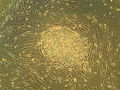
- Stem Cell Therapy: The use of stem cells to repair or replace damaged tissue or organs. Stem cells have the unique ability to develop into many different cell types in the body during early life and growth. In many tissues, they serve as a sort of internal repair system, dividing essentially without limit to replenish other cells.
- Tissue Engineering: This involves the use of a combination of cells, engineering materials, and suitable biochemical factors to improve or replace biological functions. This can involve the creation of artificial organs (bioartificial organs) through biological material.
- Gene Therapy: The correction of defective genes responsible for disease development. Gene therapy can be a way to fix a genetic problem at its source. By adding a corrected copy of a defective gene, the process can help treat certain diseases.
- Prolotherapy: A method that involves the injection of an irritant solution into a joint space, weakened ligament, or tendon insertion to relieve pain.
Applications[edit]
The applications of regenerative medicine are vast and varied, including but not limited to:
- Repairing or replacing tissue damaged by age, disease, or trauma.
- Treating congenital anomalies and genetic disorders.
- Regenerating skin for burn victims.
- Creating bioartificial organs for transplantation.
- Developing new methods for drug testing and reducing the need for animal testing.
Challenges and Future Directions[edit]
While regenerative medicine offers immense potential, there are significant challenges to overcome, including ethical issues, the risk of immune rejection, and the technical difficulties of growing complex tissues and organs. Ongoing research and technological advancements are critical to addressing these challenges.
See Also[edit]
References[edit]
<references/>
External Links[edit]

-
 Regenerative medicine
 -
 Regenerative medicine


Ad. Transform your health with W8MD Weight Loss, Sleep & MedSpa

Tired of being overweight?
Get started with evidence based, physician-supervised
affordable GLP-1 weight loss injections
Now available in New York City and Philadelphia:
- Semaglutide starting from $59.99/week and up
- Tirzepatide starting from $69.99/week and up (dose dependent)
✔ Evidence-based medical weight loss ✔ Insurance-friendly visits available ✔ Same-week appointments, evenings & weekends
Learn more:
Start your transformation today with W8MD weight loss centers.
|
WikiMD Medical Encyclopedia |
Medical Disclaimer: WikiMD is for informational purposes only and is not a substitute for professional medical advice. Content may be inaccurate or outdated and should not be used for diagnosis or treatment. Always consult your healthcare provider for medical decisions. Verify information with trusted sources such as CDC.gov and NIH.gov. By using this site, you agree that WikiMD is not liable for any outcomes related to its content. See full disclaimer.
Credits:Most images are courtesy of Wikimedia commons, and templates, categories Wikipedia, licensed under CC BY SA or similar.
Translate this page: - East Asian
中文,
日本,
한국어,
South Asian
हिन्दी,
தமிழ்,
తెలుగు,
Urdu,
ಕನ್ನಡ,
Southeast Asian
Indonesian,
Vietnamese,
Thai,
မြန်မာဘာသာ,
বাংলা
European
español,
Deutsch,
français,
Greek,
português do Brasil,
polski,
română,
русский,
Nederlands,
norsk,
svenska,
suomi,
Italian
Middle Eastern & African
عربى,
Turkish,
Persian,
Hebrew,
Afrikaans,
isiZulu,
Kiswahili,
Other
Bulgarian,
Hungarian,
Czech,
Swedish,
മലയാളം,
मराठी,
ਪੰਜਾਬੀ,
ગુજરાતી,
Portuguese,
Ukrainian
