Fournier gangrene
| Fournier gangrene | |
|---|---|
| Synonyms | N/A |
| Pronounce | N/A |
| Specialty | N/A |
| Symptoms | Pain, swelling, redness in the genital area |
| Complications | Sepsis, multiple organ failure |
| Onset | Sudden |
| Duration | Variable |
| Types | N/A |
| Causes | Polymicrobial infection |
| Risks | Diabetes mellitus, alcoholism, immunosuppression |
| Diagnosis | Clinical diagnosis, imaging studies |
| Differential diagnosis | N/A |
| Prevention | N/A |
| Treatment | Surgical debridement, antibiotics, supportive care |
| Medication | N/A |
| Prognosis | Variable, depends on severity and treatment |
| Frequency | Rare |
| Deaths | N/A |
Fournier gangrene is a type of necrotizing fasciitis that affects the perineum, including the genitalia and perianal region. It is a life-threatening condition characterized by the rapid spread of infection and tissue death.
Causes[edit]
Fournier gangrene is caused by a polymicrobial infection, which means it involves multiple types of bacteria. Common bacteria involved include Escherichia coli, Klebsiella, and Staphylococcus aureus. The infection often starts in the urogenital tract, perianal region, or skin and spreads rapidly.
Risk Factors[edit]
Several factors increase the risk of developing Fournier gangrene, including:
- Diabetes mellitus
- Alcoholism
- Immunosuppression (e.g., due to HIV/AIDS or chemotherapy)
- Obesity
- Chronic kidney disease
Symptoms[edit]
Symptoms of Fournier gangrene include:
- Severe pain in the genital area
- Swelling and redness
- Fever and malaise
- Foul-smelling discharge
- Crepitus (a crackling sensation under the skin)
Diagnosis[edit]
Diagnosis is primarily clinical, based on the symptoms and physical examination. Imaging studies such as CT scan or MRI can help assess the extent of the infection.
Treatment[edit]
Treatment involves:
- Surgical debridement to remove dead tissue
- Broad-spectrum antibiotics to treat the infection
- Supportive care including fluid resuscitation and pain management
Prognosis[edit]
The prognosis of Fournier gangrene depends on the severity of the infection and the timeliness of treatment. Early intervention improves outcomes, but the condition can be fatal if not treated promptly.
See Also[edit]
References[edit]
External Links[edit]
-
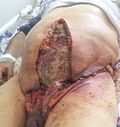 Fournier gangrene

Ad. Transform your health with W8MD Weight Loss, Sleep & MedSpa

Tired of being overweight?
Special offer:
Budget GLP-1 weight loss medications
- Semaglutide starting from $29.99/week and up with insurance for visit of $59.99 and up per week self pay.
- Tirzepatide starting from $45.00/week and up (dose dependent) or $69.99/week and up self pay
✔ Same-week appointments, evenings & weekends
Learn more:
- GLP-1 weight loss clinic NYC
- W8MD's NYC medical weight loss
- W8MD Philadelphia GLP-1 shots
- Philadelphia GLP-1 injections
- Affordable GLP-1 shots NYC
|
WikiMD Medical Encyclopedia |
Medical Disclaimer: WikiMD is for informational purposes only and is not a substitute for professional medical advice. Content may be inaccurate or outdated and should not be used for diagnosis or treatment. Always consult your healthcare provider for medical decisions. Verify information with trusted sources such as CDC.gov and NIH.gov. By using this site, you agree that WikiMD is not liable for any outcomes related to its content. See full disclaimer.
Credits:Most images are courtesy of Wikimedia commons, and templates, categories Wikipedia, licensed under CC BY SA or similar.
Translate this page: - East Asian
中文,
日本,
한국어,
South Asian
हिन्दी,
தமிழ்,
తెలుగు,
Urdu,
ಕನ್ನಡ,
Southeast Asian
Indonesian,
Vietnamese,
Thai,
မြန်မာဘာသာ,
বাংলা
European
español,
Deutsch,
français,
Greek,
português do Brasil,
polski,
română,
русский,
Nederlands,
norsk,
svenska,
suomi,
Italian
Middle Eastern & African
عربى,
Turkish,
Persian,
Hebrew,
Afrikaans,
isiZulu,
Kiswahili,
Other
Bulgarian,
Hungarian,
Czech,
Swedish,
മലയാളം,
मराठी,
ਪੰਜਾਬੀ,
ગુજરાતી,
Portuguese,
Ukrainian
