Polenta
Polenta[edit]
Polenta is a traditional Italian dish made from boiled cornmeal. It is a staple food in Northern Italy and can be served in various forms, including creamy, baked, or fried. Polenta is known for its versatility and can be paired with a wide range of ingredients, making it a popular choice in Italian cuisine.
History[edit]
Polenta has a long history dating back to ancient times. Originally, it was made from grains such as farro, chestnut flour, or millet before the introduction of maize to Europe in the 16th century. The cultivation of maize in Italy led to the widespread adoption of cornmeal as the primary ingredient for polenta.
Preparation[edit]
Polenta is prepared by slowly cooking cornmeal in water or broth until it reaches a thick, creamy consistency. It requires constant stirring to prevent lumps from forming. Once cooked, polenta can be served immediately as a soft porridge or allowed to cool and solidify, after which it can be sliced and baked, grilled, or fried.
Ingredients[edit]
Cooking Methods[edit]
- Creamy Polenta: Cooked on the stovetop with frequent stirring until smooth and creamy.
- Baked Polenta: Spread into a baking dish, allowed to cool, then baked until golden.
- Fried Polenta: Cooled polenta is sliced and fried until crispy on the outside.
Serving Suggestions[edit]
Polenta can be served as a side dish or as a main course. It pairs well with a variety of toppings and accompaniments, such as:
- Mushrooms sautéed in garlic and olive oil
- Tomato sauce with Italian sausage
- Gorgonzola or Parmesan cheese
- Roasted vegetables
Nutritional Information[edit]
Polenta is a gluten-free dish that is rich in carbohydrates and provides a good source of energy. It is low in fat and can be a healthy addition to a balanced diet when prepared with minimal added fats and sugars.
Cultural Significance[edit]
In Italy, polenta is more than just a dish; it is a cultural symbol of the regions where it is most popular. It is often associated with rustic, hearty meals and is a common feature at family gatherings and celebrations.
See Also[edit]
References[edit]
- "The History of Polenta." Italian Food Forever. Accessed October 2023.
- "Polenta: A Versatile Italian Staple." The Spruce Eats. Accessed October 2023.
External Links[edit]
- [Polenta Recipes on AllRecipes](https://www.allrecipes.com/recipes/147/side-dish/polenta/)
- [Polenta on Wikipedia](https://en.wikipedia.org/wiki/Polenta)
-
 Polenta with cotechino and lentils
 -
 Polenta
 -
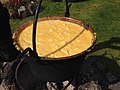 Polenta in a paiolo
 -
 Polenta in a bowl with soup broth


Ad. Transform your health with W8MD Weight Loss, Sleep & MedSpa

Tired of being overweight?
Special offer:
Budget GLP-1 weight loss medications
- Semaglutide starting from $29.99/week and up with insurance for visit of $59.99 and up per week self pay.
- Tirzepatide starting from $45.00/week and up (dose dependent) or $69.99/week and up self pay
✔ Same-week appointments, evenings & weekends
Learn more:
- GLP-1 weight loss clinic NYC
- W8MD's NYC medical weight loss
- W8MD Philadelphia GLP-1 shots
- Philadelphia GLP-1 injections
- Affordable GLP-1 shots NYC
- Budget GLP-1 shots
|
WikiMD Medical Encyclopedia |
Medical Disclaimer: WikiMD is for informational purposes only and is not a substitute for professional medical advice. Content may be inaccurate or outdated and should not be used for diagnosis or treatment. Always consult your healthcare provider for medical decisions. Verify information with trusted sources such as CDC.gov and NIH.gov. By using this site, you agree that WikiMD is not liable for any outcomes related to its content. See full disclaimer.
Credits:Most images are courtesy of Wikimedia commons, and templates, categories Wikipedia, licensed under CC BY SA or similar.
Translate this page: - East Asian
中文,
日本,
한국어,
South Asian
हिन्दी,
தமிழ்,
తెలుగు,
Urdu,
ಕನ್ನಡ,
Southeast Asian
Indonesian,
Vietnamese,
Thai,
မြန်မာဘာသာ,
বাংলা
European
español,
Deutsch,
français,
Greek,
português do Brasil,
polski,
română,
русский,
Nederlands,
norsk,
svenska,
suomi,
Italian
Middle Eastern & African
عربى,
Turkish,
Persian,
Hebrew,
Afrikaans,
isiZulu,
Kiswahili,
Other
Bulgarian,
Hungarian,
Czech,
Swedish,
മലയാളം,
मराठी,
ਪੰਜਾਬੀ,
ગુજરાતી,
Portuguese,
Ukrainian
