Basal ganglia disease
Basal Ganglia Disease
The basal ganglia are a group of nuclei in the brain interconnected with the cerebral cortex, thalamus, and brainstem, associated with a variety of functions: motor control, emotions, cognition, and learning. Diseases affecting the basal ganglia can lead to a range of neurological deficits, known collectively as basal ganglia diseases. These conditions can significantly impact an individual's quality of life, necessitating a comprehensive understanding for effective management.
Etiology
Basal ganglia diseases can arise from a variety of causes, including genetic mutations, environmental factors, and complications from other diseases. Common conditions affecting the basal ganglia include Parkinson's disease, Huntington's disease, and Wilson's disease, each with distinct etiologies. For instance, Parkinson's disease is primarily caused by the loss of dopamine-producing neurons in the substantia nigra, a component of the basal ganglia.
Symptoms
Symptoms of basal ganglia diseases vary depending on the specific condition but generally include:
- Motor symptoms: tremors, bradykinesia (slowness of movement), rigidity, and dystonia.
- Cognitive symptoms: executive function deficits, memory problems, and in some cases, dementia.
- Emotional symptoms: depression, anxiety, and mood swings.
Diagnosis
Diagnosis of basal ganglia diseases involves a combination of clinical evaluation, imaging studies such as MRI and CT scan, and sometimes genetic testing. Neurological examination focuses on identifying characteristic motor and cognitive abnormalities.
Treatment
Treatment for basal ganglia diseases is primarily symptomatic and may include medications, physical therapy, and in some cases, surgical interventions like deep brain stimulation (DBS). For example, Parkinson's disease treatment often involves dopamine replacement therapy, while Huntington's disease management is more focused on controlling symptoms.
Prognosis
The prognosis of basal ganglia diseases varies widely among different conditions. While some, like Parkinson's disease, have a progressive course but can be managed for years with treatment, others, such as certain forms of genetic dystonia, may have a more stable course.
Prevention
Prevention of basal ganglia diseases focuses on controlling risk factors where possible, such as avoiding environmental toxins and managing underlying conditions that could contribute to basal ganglia damage.
Research Directions
Current research on basal ganglia diseases is exploring novel therapeutic approaches, including gene therapy, neuroprotective agents, and advancements in surgical techniques. Understanding the molecular and cellular mechanisms underlying these conditions is crucial for developing targeted treatments.

This article is a neuroscience stub. You can help WikiMD by expanding it!
-
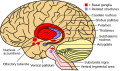 Basal ganglia and related structures
 -
 Basal ganglia classic
 -
 Basal ganglia circuits
.svg)


Ad. Transform your health with W8MD Weight Loss, Sleep & MedSpa

Tired of being overweight?
Special offer:
Budget GLP-1 weight loss medications
- Semaglutide starting from $29.99/week and up with insurance for visit of $59.99 and up per week self pay.
- Tirzepatide starting from $45.00/week and up (dose dependent) or $69.99/week and up self pay
✔ Same-week appointments, evenings & weekends
Learn more:
- GLP-1 weight loss clinic NYC
- W8MD's NYC medical weight loss
- W8MD Philadelphia GLP-1 shots
- Philadelphia GLP-1 injections
- Affordable GLP-1 shots NYC
|
WikiMD Medical Encyclopedia |
Medical Disclaimer: WikiMD is for informational purposes only and is not a substitute for professional medical advice. Content may be inaccurate or outdated and should not be used for diagnosis or treatment. Always consult your healthcare provider for medical decisions. Verify information with trusted sources such as CDC.gov and NIH.gov. By using this site, you agree that WikiMD is not liable for any outcomes related to its content. See full disclaimer.
Credits:Most images are courtesy of Wikimedia commons, and templates, categories Wikipedia, licensed under CC BY SA or similar.
Translate this page: - East Asian
中文,
日本,
한국어,
South Asian
हिन्दी,
தமிழ்,
తెలుగు,
Urdu,
ಕನ್ನಡ,
Southeast Asian
Indonesian,
Vietnamese,
Thai,
မြန်မာဘာသာ,
বাংলা
European
español,
Deutsch,
français,
Greek,
português do Brasil,
polski,
română,
русский,
Nederlands,
norsk,
svenska,
suomi,
Italian
Middle Eastern & African
عربى,
Turkish,
Persian,
Hebrew,
Afrikaans,
isiZulu,
Kiswahili,
Other
Bulgarian,
Hungarian,
Czech,
Swedish,
മലയാളം,
मराठी,
ਪੰਜਾਬੀ,
ગુજરાતી,
Portuguese,
Ukrainian
