Aphanizomenon flos-aquae
Aphanizomenon flos-aquae[edit]
-
 Aphanizomenon colony under fluorescence microscopy
 -
 Simple filaments of Aphanizomenon
 -
 Aphanizomenon bloom in Upper Klamath Lake
 -
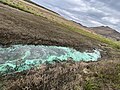 Toxic bloom of Aphanizomenon


Aphanizomenon flos-aquae[edit]
Aphanizomenon flos-aquae (AFA) is a species of cyanobacteria, also known as blue-green algae, that is found in freshwater environments. It is known for its ability to form dense blooms on the surface of lakes and ponds, which can have significant ecological and health impacts.
Description[edit]
Aphanizomenon flos-aquae is a filamentous cyanobacterium that forms long chains of cells. These filaments can aggregate into large mats or blooms that float on the surface of water bodies. The cells contain chlorophyll-a, which gives them their characteristic blue-green color, and they are capable of photosynthesis.
Habitat[edit]
Aphanizomenon flos-aquae is commonly found in freshwater lakes, ponds, and reservoirs. It thrives in nutrient-rich waters, particularly those with high levels of nitrogen and phosphorus. These conditions are often the result of agricultural runoff, wastewater discharge, and other human activities that increase nutrient loading in aquatic ecosystems.
Ecological Impact[edit]
Blooms of Aphanizomenon flos-aquae can have several ecological impacts. They can reduce light penetration in the water, affecting submerged aquatic vegetation and disrupting the food web. The decomposition of large blooms can lead to oxygen depletion in the water, causing fish kills and other negative effects on aquatic life.
Health Concerns[edit]
Some strains of Aphanizomenon flos-aquae are known to produce toxins, such as cylindrospermopsin and saxitoxins, which can pose health risks to humans and animals. These toxins can contaminate drinking water supplies and recreational waters, leading to potential exposure through ingestion, inhalation, or skin contact.
Uses[edit]
Despite the potential health risks, Aphanizomenon flos-aquae is harvested and marketed as a dietary supplement. It is claimed to have various health benefits, although these claims are not universally supported by scientific evidence. The safety and efficacy of AFA supplements remain a topic of research and debate.
Control and Management[edit]
Managing blooms of Aphanizomenon flos-aquae involves reducing nutrient inputs to water bodies, such as controlling agricultural runoff and improving wastewater treatment. Physical removal of blooms and the use of algaecides are other methods that can be employed, although they may have limited effectiveness and potential environmental side effects.
Related pages[edit]
Ad. Transform your life with W8MD's
GLP-1 weight loss injections special from $29.99 with insurance
|
WikiMD Medical Encyclopedia |
Medical Disclaimer: WikiMD is for informational purposes only and is not a substitute for professional medical advice. Content may be inaccurate or outdated and should not be used for diagnosis or treatment. Always consult your healthcare provider for medical decisions. Verify information with trusted sources such as CDC.gov and NIH.gov. By using this site, you agree that WikiMD is not liable for any outcomes related to its content. See full disclaimer.
Credits:Most images are courtesy of Wikimedia commons, and templates, categories Wikipedia, licensed under CC BY SA or similar.
Translate this page: - East Asian
中文,
日本,
한국어,
South Asian
हिन्दी,
தமிழ்,
తెలుగు,
Urdu,
ಕನ್ನಡ,
Southeast Asian
Indonesian,
Vietnamese,
Thai,
မြန်မာဘာသာ,
বাংলা
European
español,
Deutsch,
français,
Greek,
português do Brasil,
polski,
română,
русский,
Nederlands,
norsk,
svenska,
suomi,
Italian
Middle Eastern & African
عربى,
Turkish,
Persian,
Hebrew,
Afrikaans,
isiZulu,
Kiswahili,
Other
Bulgarian,
Hungarian,
Czech,
Swedish,
മലയാളം,
मराठी,
ਪੰਜਾਬੀ,
ગુજરાતી,
Portuguese,
Ukrainian
