Craniate
Craniate is a term used to describe animals that possess a skull. The term is derived from the Latin word "cranium," which means "skull." Craniates include all vertebrates, including humans, as well as some invertebrates.
Definition[edit]
A craniate is an animal that has a skull. In the biological classification, craniates are a subgroup of the subphylum Vertebrata, which is part of the phylum Chordata. The distinguishing feature of craniates is the presence of a skull, which is a bony or cartilaginous structure that encases the brain.
Characteristics[edit]
Craniates share several characteristics, including:
- A well-defined head
- A brain enclosed in a skull
- Paired sensory organs
- A nervous system that is centralized and partially enclosed within a spinal cord
Classification[edit]
Craniates are classified into two main groups:
- Vertebrates: These are craniates that have a backbone. This group includes mammals, birds, reptiles, amphibians, and fish.
- Hagfish: These are craniates that lack a backbone. They are considered to be the most primitive form of craniate.
Evolution[edit]
The first craniates are believed to have evolved more than 500 million years ago during the Cambrian explosion. The evolution of the skull is considered a key event in the evolution of craniates, as it allowed for the development of a larger brain and more complex sensory systems.
See also[edit]
References[edit]
<references />
 | |
|---|---|
 |
 |
| This medical article is a stub. You can help Wikipedia by adding missing information. |
-
 Craniate
 -
 Craniate
 -
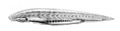 Craniate
 -
 Craniate
 -
 Craniate
 -
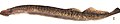 Craniate
 -
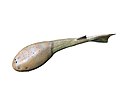 Craniate
 -
 Craniate
 -
 Craniate
 -
 Craniate
 -
 Craniate
 -
 Craniate


.png)


Ad. Transform your health with W8MD Weight Loss, Sleep & MedSpa

Tired of being overweight?
Special offer:
Budget GLP-1 weight loss medications
- Semaglutide starting from $29.99/week and up with insurance for visit of $59.99 and up per week self pay.
- Tirzepatide starting from $45.00/week and up (dose dependent) or $69.99/week and up self pay
✔ Same-week appointments, evenings & weekends
Learn more:
- GLP-1 weight loss clinic NYC
- W8MD's NYC medical weight loss
- W8MD Philadelphia GLP-1 shots
- Philadelphia GLP-1 injections
- Affordable GLP-1 shots NYC
- Budget GLP-1 shots
|
WikiMD Medical Encyclopedia |
Medical Disclaimer: WikiMD is for informational purposes only and is not a substitute for professional medical advice. Content may be inaccurate or outdated and should not be used for diagnosis or treatment. Always consult your healthcare provider for medical decisions. Verify information with trusted sources such as CDC.gov and NIH.gov. By using this site, you agree that WikiMD is not liable for any outcomes related to its content. See full disclaimer.
Credits:Most images are courtesy of Wikimedia commons, and templates, categories Wikipedia, licensed under CC BY SA or similar.
Translate this page: - East Asian
中文,
日本,
한국어,
South Asian
हिन्दी,
தமிழ்,
తెలుగు,
Urdu,
ಕನ್ನಡ,
Southeast Asian
Indonesian,
Vietnamese,
Thai,
မြန်မာဘာသာ,
বাংলা
European
español,
Deutsch,
français,
Greek,
português do Brasil,
polski,
română,
русский,
Nederlands,
norsk,
svenska,
suomi,
Italian
Middle Eastern & African
عربى,
Turkish,
Persian,
Hebrew,
Afrikaans,
isiZulu,
Kiswahili,
Other
Bulgarian,
Hungarian,
Czech,
Swedish,
മലയാളം,
मराठी,
ਪੰਜਾਬੀ,
ગુજરાતી,
Portuguese,
Ukrainian
