Spanish wine
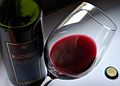
Spanish wine is the product of fermented grapes grown in the country of Spain, one of the world's largest wine producers. The country's diverse geography and climate, along with its rich history, have contributed to the wide range of wine styles produced.
History
The history of Spanish wine dates back over 3000 years, with the first vineyards planted by the Phoenicians in the region now known as Andalusia. The Romans later expanded viticulture across the peninsula, and the wines produced were highly prized throughout the Roman Empire.
Regions
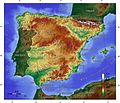
Spain is divided into several wine regions, each with its own unique characteristics and styles of wine. Some of the most notable include:
- Rioja: Known for its high-quality red wines made primarily from the Tempranillo grape.
- Ribera del Duero: Famous for its robust, full-bodied red wines also made from Tempranillo.
- Priorat: A region in Catalonia known for its powerful red wines made from a blend of grape varieties.
- Rías Baixas: Located in Galicia, this region is famous for its white wines made from the Albariño grape.
Grape Varieties
Spain is home to a wide range of grape varieties, many of which are indigenous to the country. Some of the most important include:
- Tempranillo: The most widely planted red grape variety in Spain, used in many of the country's most famous wines.
- Garnacha: A versatile red grape variety that can produce a wide range of wine styles, from light and fruity to rich and full-bodied.
- Albariño: A white grape variety primarily grown in Galicia, known for its aromatic, high-acid wines.
- Verdejo: A white grape variety grown in the Rueda region, producing fresh, aromatic wines with high acidity.
Production Methods
Spanish wine production methods vary widely depending on the region and the style of wine being produced. However, some common techniques include:
- Oak aging: Many Spanish wines, particularly reds, are aged in oak barrels to add complexity and tannin structure.
- Malolactic fermentation: This process, which converts harsh malic acid into softer lactic acid, is commonly used in Spanish red wine production.
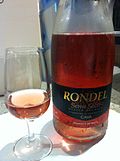
- Traditional method sparkling wine production: Used to produce Cava, Spain's most famous sparkling wine.
Classification
Spanish wines are classified according to the Denominación de Origen (DO) system, which regulates the geographical origin, grape varieties and production methods used. There are also higher quality categories, such as DO Pago (single estate wines) and DO Calificada (regions with a proven track record of consistent quality).
See Also


-
 Spanish wine
 -
 Spanish wine
 -
 Spanish wine
 -
 Spanish wine
 -
 Spanish wine
 -
 Spanish wine
 -
 Spanish wine
 -
 Spanish wine
 -
 Spanish wine
 -
 Spanish wine
 -
 Spanish wine
 -
 Spanish wine


_-_WGA24408.jpg)


Ad. Transform your life with W8MD's Budget GLP-1 injections from $75


W8MD offers a medical weight loss program to lose weight in Philadelphia. Our physician-supervised medical weight loss provides:
- Weight loss injections in NYC (generic and brand names):
- Zepbound / Mounjaro, Wegovy / Ozempic, Saxenda
- Most insurances accepted or discounted self-pay rates. We will obtain insurance prior authorizations if needed.
- Generic GLP1 weight loss injections from $75 for the starting dose.
- Also offer prescription weight loss medications including Phentermine, Qsymia, Diethylpropion, Contrave etc.
NYC weight loss doctor appointmentsNYC weight loss doctor appointments
Start your NYC weight loss journey today at our NYC medical weight loss and Philadelphia medical weight loss clinics.
- Call 718-946-5500 to lose weight in NYC or for medical weight loss in Philadelphia 215-676-2334.
- Tags:NYC medical weight loss, Philadelphia lose weight Zepbound NYC, Budget GLP1 weight loss injections, Wegovy Philadelphia, Wegovy NYC, Philadelphia medical weight loss, Brookly weight loss and Wegovy NYC


|
WikiMD's Wellness Encyclopedia |
| Let Food Be Thy Medicine Medicine Thy Food - Hippocrates |
Medical Disclaimer: WikiMD is not a substitute for professional medical advice. The information on WikiMD is provided as an information resource only, may be incorrect, outdated or misleading, and is not to be used or relied on for any diagnostic or treatment purposes. Please consult your health care provider before making any healthcare decisions or for guidance about a specific medical condition. WikiMD expressly disclaims responsibility, and shall have no liability, for any damages, loss, injury, or liability whatsoever suffered as a result of your reliance on the information contained in this site. By visiting this site you agree to the foregoing terms and conditions, which may from time to time be changed or supplemented by WikiMD. If you do not agree to the foregoing terms and conditions, you should not enter or use this site. See full disclaimer.
Credits:Most images are courtesy of Wikimedia commons, and templates, categories Wikipedia, licensed under CC BY SA or similar.
Translate this page: - East Asian
中文,
日本,
한국어,
South Asian
हिन्दी,
தமிழ்,
తెలుగు,
Urdu,
ಕನ್ನಡ,
Southeast Asian
Indonesian,
Vietnamese,
Thai,
မြန်မာဘာသာ,
বাংলা
European
español,
Deutsch,
français,
Greek,
português do Brasil,
polski,
română,
русский,
Nederlands,
norsk,
svenska,
suomi,
Italian
Middle Eastern & African
عربى,
Turkish,
Persian,
Hebrew,
Afrikaans,
isiZulu,
Kiswahili,
Other
Bulgarian,
Hungarian,
Czech,
Swedish,
മലയാളം,
मराठी,
ਪੰਜਾਬੀ,
ગુજરાતી,
Portuguese,
Ukrainian
