Topoisomerase
Topoisomerase

Topoisomerases are enzymes that participate in the overwinding or underwinding of DNA. The winding problem of DNA arises due to the intertwined nature of its double-helical structure. During processes such as DNA replication and transcription, the DNA helix must be unwound, which can lead to supercoiling. Topoisomerases resolve these topological issues by inducing transient breaks in the DNA strands, allowing them to be untangled or relaxed.
Types of Topoisomerases
Topoisomerases are classified into two main types based on their mechanism of action:
Type I Topoisomerases

Type I topoisomerases cut one of the two strands of DNA, allowing the uncut strand to pass through the break before resealing the cut. This process changes the linking number of the DNA by one. Type I topoisomerases are further divided into Type IA and Type IB, each with distinct mechanisms and structural features.
Type II Topoisomerases

Type II topoisomerases cut both strands of the DNA helix simultaneously, allowing another segment of the double helix to pass through the break. This changes the linking number by two. These enzymes are essential for processes such as chromosome segregation during cell division.
Mechanism of Action
Topoisomerases function through a series of steps involving DNA cleavage, passage, and religation. The catalytic mechanism involves the formation of a transient covalent bond between the enzyme and the DNA, which facilitates the controlled breakage and rejoining of DNA strands.

Biological Functions
Topoisomerases play critical roles in various cellular processes:
- DNA Replication: They prevent the overwinding of DNA ahead of the replication fork.
- Transcription: They resolve supercoils generated during the transcription of DNA into RNA.
- Chromosome Condensation: They are involved in the condensation and decondensation of chromosomes during cell division.

Inhibitors and Poisons
Topoisomerase inhibitors are important tools in cancer therapy. They interfere with the enzyme's ability to manage DNA topology, leading to DNA damage and cell death.
Bacterial Topoisomerase Poisons

These compounds target bacterial topoisomerases, making them effective antibiotics. Examples include quinolones and fluoroquinolones.
Eukaryotic Topoisomerase Inhibitors

In eukaryotes, topoisomerase inhibitors are used in chemotherapy. Drugs such as etoposide and doxorubicin target topoisomerase II, while camptothecin targets topoisomerase I.
DNA Damage and Repair
Topoisomerase activity can lead to DNA double-strand breaks (DSBs), which are repaired by cellular mechanisms such as non-homologous end joining (NHEJ).

Related Pages
References
<references group="" responsive="1"></references>
-
 Overview of DNA topology
 -
 Topological ramifications of DNA replication and transcription
 -
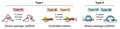 Catalytic mechanisms of Topoisomerases
 -
 Topo IA catalytic cycle Illustration
 -
 Type II topoisomerase catalytic cycle
 -
 Bacterial topoisomerase poisons
 -
 Eukaryotic topoisomerase poisons and inhibitors
 -
 DNA DSB TOP2B PARP-1 complex with NHEJ enzymes
Ad. Transform your life with W8MD's Budget GLP-1 injections from $29.99


W8MD offers medical weight loss programs including NYC medical weight loss and Philadelphia medical weight loss offering:
- Affordable GLP1 shots (generic and brand names) such as
- Wegovy NYC (Semaglutide)
- Zepbound NYC /
- Learn more: Budget GLP1 NYC & Philadelphia GLP1 shots
- Most insurances accepted
- Affordable GLP1 weight loss NYC such as Semaglutide starting from $29.99/week and $45.00/week (Tirzepatide) with insurance.
- Prescription weight loss NYC including:
NYC weight loss doctor appointmentsNYC weight loss doctor appointments
Start your physician weight loss journey today at our:
- NYC medical weight loss
- Philadelphia medical weight loss
- Call 718-946-5500 for NYC or 215-676-2334 for Philadelphia
Tags: Budget glp1 weight loss NYC, Zepbound NYC, Philadelphia medical weight loss, Wegovy NYC, Affordable glp1 shots Philadelphia


|
WikiMD's Wellness Encyclopedia |
| Let Food Be Thy Medicine Medicine Thy Food - Hippocrates |
Medical Disclaimer: WikiMD is not a substitute for professional medical advice. The information on WikiMD is provided as an information resource only, may be incorrect, outdated or misleading, and is not to be used or relied on for any diagnostic or treatment purposes. Please consult your health care provider before making any healthcare decisions or for guidance about a specific medical condition. WikiMD expressly disclaims responsibility, and shall have no liability, for any damages, loss, injury, or liability whatsoever suffered as a result of your reliance on the information contained in this site. By visiting this site you agree to the foregoing terms and conditions, which may from time to time be changed or supplemented by WikiMD. If you do not agree to the foregoing terms and conditions, you should not enter or use this site. See full disclaimer.
Credits:Most images are courtesy of Wikimedia commons, and templates, categories Wikipedia, licensed under CC BY SA or similar.
Translate this page: - East Asian
中文,
日本,
한국어,
South Asian
हिन्दी,
தமிழ்,
తెలుగు,
Urdu,
ಕನ್ನಡ,
Southeast Asian
Indonesian,
Vietnamese,
Thai,
မြန်မာဘာသာ,
বাংলা
European
español,
Deutsch,
français,
Greek,
português do Brasil,
polski,
română,
русский,
Nederlands,
norsk,
svenska,
suomi,
Italian
Middle Eastern & African
عربى,
Turkish,
Persian,
Hebrew,
Afrikaans,
isiZulu,
Kiswahili,
Other
Bulgarian,
Hungarian,
Czech,
Swedish,
മലയാളം,
मराठी,
ਪੰਜਾਬੀ,
ગુજરાતી,
Portuguese,
Ukrainian
