Kelp forest
Kelp Forests are unique marine ecosystems characterized by high biodiversity and productivity. They are predominantly found in cold, nutrient-rich waters of the Pacific and Atlantic Oceans. Kelp forests are dominated by large brown algae, specifically the genera Macrocystis and Nereocystis, which provide a three-dimensional habitat for a wide array of marine organisms.
Characteristics[edit]
Kelp forests thrive in clear, shallow waters where sunlight can penetrate, enabling photosynthesis. They are anchored to the seafloor by holdfasts, which resemble roots. From these holdfasts, kelp fronds grow upward, reaching towards the surface. The fronds form a dense canopy at the water's surface. This canopy provides shelter and food for numerous species, from invertebrates to large fish and marine mammals.
Biodiversity[edit]
The biodiversity within a kelp forest is among the highest in any marine environment. Species commonly found in these habitats include sea urchins, starfish, anemones, crabs, and numerous fish species. Kelp forests also serve as breeding grounds for many marine animals, offering protection from predators.
Ecological Importance[edit]
Kelp forests play a critical role in coastal ecosystems. They act as a buffer against wave action, protecting coastlines from erosion. Additionally, kelp is a primary producer, converting carbon dioxide into oxygen and biomass through photosynthesis, thus supporting the entire food web. Kelp forests also sequester carbon, helping to mitigate the effects of climate change.
Threats[edit]
Kelp forests face several threats, including climate change, pollution, and overfishing. Rising sea temperatures can stress kelp, leading to reduced growth and reproduction. Pollution, particularly from agricultural runoff, can cause eutrophication, depleting oxygen levels and harming kelp ecosystems. Overfishing of key species, such as sea otters, can lead to an increase in sea urchin populations, which can overgraze and decimate kelp forests.
Conservation[edit]
Efforts to conserve kelp forests include establishing marine protected areas (MPAs), restoring overfished populations, and reducing pollution. MPAs can help preserve biodiversity and provide a refuge in which marine species can thrive. Restoring populations of predators, such as sea otters, can help control sea urchin populations and support kelp forest regeneration.
See Also[edit]
This marine-related article is a stub. You can help WikiMD by expanding it.
-
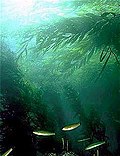 Kelp forest
 -
 Kelp forest distribution map
 -
 Kelp forest Cojo Anchorage
 -
 Rockfish around kelp Monterey Bay Aquarium
 -
 Diver in kelp forest
 -
 Kelp Forest off of Anacapa Island California
 -
 Giant kelp
 -
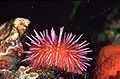 Sea urchin
 -
 Mother sea otter with rare twin baby pups
 -
 Calliostoma annulatum
 -
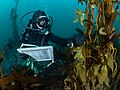 A diver records kelp growth
 -
 Melibe


.jpg)

.jpg)

Ad. Transform your life with W8MD's
GLP-1 weight loss injections special from $29.99


W8MD Medical Weight Loss, Sleep and Medspa offers physician-supervised medical weight loss programs: NYC medical weight loss Philadelphia medical weight loss
Affordable GLP-1 Weight Loss ShotsAffordable GLP-1 Weight Loss Shots
Budget GLP-1 injections NYC (insurance & self-pay options) Popular treatments:
- Semaglutide starting from $29.99/week
- Tirzepatide starting from $45.00/week
✔ Most insurances accepted for visits ✔ Prior authorization support when eligible
Start your physician weight loss NYC journey today:
📍 NYC: Brooklyn weight loss center 📍 Philadelphia: Philadelphia weight loss center
📞 Call: 718-946-5500 (NYC) | 215-676-2334 (Philadelphia)
Tags: Affordable GLP1 weight loss NYC, Wegovy NYC, Zepbound NYC, Philadelphia medical weight loss


|
WikiMD Medical Encyclopedia |
Medical Disclaimer: WikiMD is not a substitute for professional medical advice. The information on WikiMD is provided as an information resource only, may be incorrect, outdated or misleading, and is not to be used or relied on for any diagnostic or treatment purposes. Please consult your health care provider before making any healthcare decisions or for guidance about a specific medical condition. WikiMD expressly disclaims responsibility, and shall have no liability, for any damages, loss, injury, or liability whatsoever suffered as a result of your reliance on the information contained in this site. By visiting this site you agree to the foregoing terms and conditions, which may from time to time be changed or supplemented by WikiMD. If you do not agree to the foregoing terms and conditions, you should not enter or use this site. See full disclaimer.
Credits:Most images are courtesy of Wikimedia commons, and templates, categories Wikipedia, licensed under CC BY SA or similar.
Translate this page: - East Asian
中文,
日本,
한국어,
South Asian
हिन्दी,
தமிழ்,
తెలుగు,
Urdu,
ಕನ್ನಡ,
Southeast Asian
Indonesian,
Vietnamese,
Thai,
မြန်မာဘာသာ,
বাংলা
European
español,
Deutsch,
français,
Greek,
português do Brasil,
polski,
română,
русский,
Nederlands,
norsk,
svenska,
suomi,
Italian
Middle Eastern & African
عربى,
Turkish,
Persian,
Hebrew,
Afrikaans,
isiZulu,
Kiswahili,
Other
Bulgarian,
Hungarian,
Czech,
Swedish,
മലയാളം,
मराठी,
ਪੰਜਾਬੀ,
ગુજરાતી,
Portuguese,
Ukrainian
