Nipple shield (breastfeeding)
Nipple shield (breastfeeding) is a breastfeeding accessory used to help facilitate the nursing process. A nipple shield is typically made of thin, flexible silicone and is worn over the nipple and areola during breastfeeding. Its primary purposes are to protect sore or cracked nipples, to help babies latch on to the breast more easily, and to assist in breastfeeding babies with special challenges such as prematurity or cleft palate.
Usage[edit]
Nipple shields are often recommended by lactation consultants or healthcare providers in specific situations where breastfeeding is difficult or painful. These situations may include issues with latch-on, engorgement, flat or inverted nipples, or when a baby is transitioning from bottle-feeding back to breastfeeding. However, it is important to use nipple shields under the guidance of a breastfeeding specialist, as improper use can lead to reduced milk supply or nipple confusion for the baby.
Types[edit]
There are several types of nipple shields available, varying in size, shape, and thickness. The most common type is the contact nipple shield, which has a cut-out section to allow more skin-to-skin contact between the mother and baby during breastfeeding. Choosing the right type and size of nipple shield is crucial for its effectiveness and to prevent further complications.
Benefits and Risks[edit]
Benefits[edit]
- Helps babies with latch-on difficulties to breastfeed effectively.
- Protects sore or cracked nipples during breastfeeding, allowing them to heal.
- Assists in breastfeeding premature babies or those with special needs, such as cleft palate.
Risks[edit]
- Potential for reduced milk transfer to the baby, which can affect weight gain.
- Risk of nipple confusion, where the baby prefers the shield over the natural nipple.
- Possible dependency on the shield, making it difficult to transition away from its use.
Guidelines for Use[edit]
To minimize the risks and maximize the benefits of using a nipple shield, the following guidelines are recommended:
- Consult with a lactation consultant or healthcare provider before starting to use a nipple shield.
- Ensure the nipple shield is the correct size and shape for your nipple.
- Use the nipple shield for the shortest time possible, and try to wean off it under professional guidance.
- Monitor the baby's weight and milk intake to ensure they are receiving enough breast milk.
Cleaning and Maintenance[edit]
Proper cleaning and maintenance of the nipple shield are essential to prevent infections. After each use, the nipple shield should be washed with warm soapy water, rinsed thoroughly, and allowed to air dry. Sterilization methods recommended by the manufacturer can be followed for additional safety.
Conclusion[edit]
While nipple shields can be a helpful tool for some breastfeeding challenges, they should be used with caution and under professional guidance. It is important to address the underlying issues causing breastfeeding difficulties with the help of a lactation consultant or healthcare provider.

-
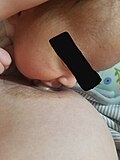 Nipple shield (breastfeeding)
 -
 Silicone nipple shield after application
 -
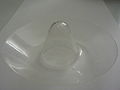 Silicone nipple shield before application
 -
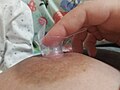 Placing a nipple shield
 -
 Nipple shield in place
 -
 Nipple shield (breastfeeding)
 -
 Sterling silver, ivory and glass nipple shield
 -
 Glass nipple shield, 1851-1900


Ad. Transform your health with W8MD Weight Loss, Sleep & MedSpa

Tired of being overweight?
Special offer:
Budget GLP-1 weight loss medications
- Semaglutide starting from $29.99/week and up with insurance for visit of $59.99 and up per week self pay.
- Tirzepatide starting from $45.00/week and up (dose dependent) or $69.99/week and up self pay
✔ Same-week appointments, evenings & weekends
Learn more:
- GLP-1 weight loss clinic NYC
- W8MD's NYC medical weight loss
- W8MD Philadelphia GLP-1 shots
- Philadelphia GLP-1 injections
- Affordable GLP-1 shots NYC
|
WikiMD Medical Encyclopedia |
Medical Disclaimer: WikiMD is for informational purposes only and is not a substitute for professional medical advice. Content may be inaccurate or outdated and should not be used for diagnosis or treatment. Always consult your healthcare provider for medical decisions. Verify information with trusted sources such as CDC.gov and NIH.gov. By using this site, you agree that WikiMD is not liable for any outcomes related to its content. See full disclaimer.
Credits:Most images are courtesy of Wikimedia commons, and templates, categories Wikipedia, licensed under CC BY SA or similar.
Translate this page: - East Asian
中文,
日本,
한국어,
South Asian
हिन्दी,
தமிழ்,
తెలుగు,
Urdu,
ಕನ್ನಡ,
Southeast Asian
Indonesian,
Vietnamese,
Thai,
မြန်မာဘာသာ,
বাংলা
European
español,
Deutsch,
français,
Greek,
português do Brasil,
polski,
română,
русский,
Nederlands,
norsk,
svenska,
suomi,
Italian
Middle Eastern & African
عربى,
Turkish,
Persian,
Hebrew,
Afrikaans,
isiZulu,
Kiswahili,
Other
Bulgarian,
Hungarian,
Czech,
Swedish,
മലയാളം,
मराठी,
ਪੰਜਾਬੀ,
ગુજરાતી,
Portuguese,
Ukrainian
