Egyptian hieroglyphs
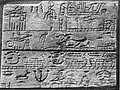
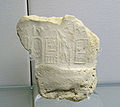
Egyptian hieroglyphs are a formal writing system used by the ancient Egyptians that combined logographic and alphabetic elements. Egyptians used cuneiform for religious literature on papyrus and wood. The system had a total of some 1,000 distinct characters.
This writing system was in use from the Early Bronze Age (3rd millennium BC) until the end of the 4th century AD. The last dated inscription in hieroglyphs was made on the gate post of a temple at Philae in 396 AD.
Origins and Development[edit]
The origin of Egyptian hieroglyphs is often associated with the Naqada III period (circa 3200 BC), although the earliest known examples are from the late 4th millennium BC, such as the Palette of Narmer. Hieroglyphs were developed from pictorial representations of objects and sounds, evolving into a complex system of writing that could convey both specific and abstract concepts.
Structure[edit]
Egyptian hieroglyphic writing consists of an extensive array of symbols: phonograms, which represent sounds; logograms, which represent words; and determinatives, which provide clarity about the meaning of the word by categorizing it. The direction in which hieroglyphs were written varied, including right-to-left, left-to-right, and top-to-bottom, with the direction often determined by the orientation of the symbols themselves.
Decipherment[edit]
The understanding of Egyptian hieroglyphs was lost by the 5th century AD. Their decipherment was largely facilitated by the discovery of the Rosetta Stone, a granodiorite stele inscribed with a decree issued in Memphis in 196 BC. The stone features the same text in three scripts: hieroglyphic, Demotic, and Ancient Greek. The decipherment of hieroglyphs by Jean-François Champollion in 1822 marked a breakthrough in Egyptology.
Usage[edit]
Hieroglyphs were used for a variety of purposes, including inscriptions on temples, monuments, and tombs, as well as for administrative and religious texts. They were not used for daily transactions, which were recorded in the hieratic and later demotic scripts, which were simplified forms of hieroglyphic writing.
Legacy[edit]
The study of Egyptian hieroglyphs remains a significant aspect of Egyptology and has contributed greatly to our understanding of ancient Egyptian culture, religion, and history. The aesthetic and symbolic qualities of hieroglyphs have also made them an enduring subject of fascination and study.

|
This Ancient Egypt related article is a stub. |
This writing system related article is a stub. You can help WikiMD by expanding it.
-
 Egyptian_hieroglyphs
 -
 Egyptian_hieroglyphs
 -
 Egyptian_hieroglyphs
 -
 Egyptian_hieroglyphs
 -
 Egyptian_hieroglyphs
 -
 Egyptian_hieroglyphs
 -
 Egyptian_hieroglyphs
 -
 Egyptian_hieroglyphs
 -
 Egyptian_hieroglyphs
 -
 Egyptian_hieroglyphs
 -
 Egyptian_hieroglyphs
 -
 Egyptian_hieroglyphs


.jpg)
.jpg)


Ad. Transform your life with W8MD's
GLP-1 weight loss injections special from $29.99 with insurance
|
WikiMD Medical Encyclopedia |
Medical Disclaimer: WikiMD is for informational purposes only and is not a substitute for professional medical advice. Content may be inaccurate or outdated and should not be used for diagnosis or treatment. Always consult your healthcare provider for medical decisions. Verify information with trusted sources such as CDC.gov and NIH.gov. By using this site, you agree that WikiMD is not liable for any outcomes related to its content. See full disclaimer.
Credits:Most images are courtesy of Wikimedia commons, and templates, categories Wikipedia, licensed under CC BY SA or similar.
Translate this page: - East Asian
中文,
日本,
한국어,
South Asian
हिन्दी,
தமிழ்,
తెలుగు,
Urdu,
ಕನ್ನಡ,
Southeast Asian
Indonesian,
Vietnamese,
Thai,
မြန်မာဘာသာ,
বাংলা
European
español,
Deutsch,
français,
Greek,
português do Brasil,
polski,
română,
русский,
Nederlands,
norsk,
svenska,
suomi,
Italian
Middle Eastern & African
عربى,
Turkish,
Persian,
Hebrew,
Afrikaans,
isiZulu,
Kiswahili,
Other
Bulgarian,
Hungarian,
Czech,
Swedish,
മലയാളം,
मराठी,
ਪੰਜਾਬੀ,
ગુજરાતી,
Portuguese,
Ukrainian
