Graphics card
Graphics Card
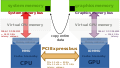
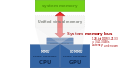
A graphics card, also known as a video card, display card, graphics adapter, or display adapter, is an expansion card which generates a feed of output images to a display device (such as a computer monitor). Frequently, these are advertised as discrete or dedicated graphics cards, emphasizing the distinction between these and integrated graphics. At the core of both is the graphics processing unit (GPU), which is the main part that does the actual computations, but should not be confused as the video card as a whole, although "GPU" is often used to refer to video cards.
History[edit]
The history of the graphics card begins in the early 1980s when the first dedicated graphics processing units were developed. These early GPUs were far from the powerful units we know today, primarily designed for basic tasks such as rendering simple images and text. As technology progressed, the capabilities of graphics cards expanded significantly. In the 1990s, the introduction of 3D graphics and multimedia capabilities marked a significant leap forward. Companies like NVIDIA and ATI Technologies (now part of AMD) began to dominate the market with advanced GPUs that offered increasingly sophisticated rendering capabilities and support for higher resolutions and multiple monitors.
Function[edit]
The primary function of a graphics card is to manage and enhance video and graphics performance. This includes rendering images, video, and animations, as well as running complex 3D applications and games. The GPU offloads these tasks from the central processing unit (CPU), allowing for smoother video playback and more detailed and complex graphics in games and other applications.
Components[edit]
A typical graphics card includes the following components:
- GPU: The heart of the card, responsible for processing data and executing instructions related to graphics and video rendering.
- Video Memory (VRAM): Dedicated memory used by the GPU to store image data, textures, and other graphical information. The amount and type of VRAM can significantly affect performance.
- Cooling System: Since GPUs generate a lot of heat, a cooling system is essential. This can include fans, heat sinks, and in some high-end models, liquid cooling solutions.
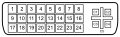
- Output Interfaces: These are ports that allow the graphics card to connect to display devices. Common interfaces include HDMI, DisplayPort, DVI, and VGA.
Types of Graphics Cards[edit]
Graphics cards can be broadly categorized into two types:
- Integrated Graphics Cards: These are built into the motherboard or CPU and share memory with the CPU. While they are less powerful, they consume less power and are suitable for basic tasks.
- Dedicated Graphics Cards: These are separate components installed in the computer's expansion slot. They have their own memory and are capable of handling high-end gaming, video editing, and 3D rendering tasks.
Choosing a Graphics Card[edit]
When selecting a graphics card, it's important to consider the specific needs of the user. Factors to consider include the type of applications being run, the resolution and refresh rate of the monitor, and the available budget. For gamers and professionals working with video editing and 3D rendering, a high-end dedicated graphics card is typically required. For general computing tasks, an integrated graphics card may suffice.
Future of Graphics Cards[edit]
The future of graphics cards looks promising, with advancements in technology continually pushing the boundaries of what's possible. We are seeing trends towards more power-efficient designs, higher performance, and support for emerging technologies like ray tracing and AI-driven enhancements. As display technologies evolve, graphics cards will continue to play a crucial role in delivering immersive visual experiences.

-
 Graphics_card
 -
 Graphics_card
 -
 Graphics_card
 -
 Graphics_card
 -
 Graphics_card
 -
 Graphics_card
 -
 Graphics_card
 -
 Graphics_card
 -
 Graphics_card
 -
 Graphics_card
 -
 Graphics_card
 -
 Graphics_card


.jpg)


Ad. Transform your health with W8MD Weight Loss, Sleep & MedSpa

Tired of being overweight?
Special offer:
Budget GLP-1 weight loss medications
- Semaglutide starting from $29.99/week and up with insurance for visit of $59.99 and up per week self pay.
- Tirzepatide starting from $45.00/week and up (dose dependent) or $69.99/week and up self pay
✔ Same-week appointments, evenings & weekends
Learn more:
- GLP-1 weight loss clinic NYC
- W8MD's NYC medical weight loss
- W8MD Philadelphia GLP-1 shots
- Philadelphia GLP-1 injections
- Affordable GLP-1 shots NYC
|
WikiMD Medical Encyclopedia |
Medical Disclaimer: WikiMD is for informational purposes only and is not a substitute for professional medical advice. Content may be inaccurate or outdated and should not be used for diagnosis or treatment. Always consult your healthcare provider for medical decisions. Verify information with trusted sources such as CDC.gov and NIH.gov. By using this site, you agree that WikiMD is not liable for any outcomes related to its content. See full disclaimer.
Credits:Most images are courtesy of Wikimedia commons, and templates, categories Wikipedia, licensed under CC BY SA or similar.
Translate this page: - East Asian
中文,
日本,
한국어,
South Asian
हिन्दी,
தமிழ்,
తెలుగు,
Urdu,
ಕನ್ನಡ,
Southeast Asian
Indonesian,
Vietnamese,
Thai,
မြန်မာဘာသာ,
বাংলা
European
español,
Deutsch,
français,
Greek,
português do Brasil,
polski,
română,
русский,
Nederlands,
norsk,
svenska,
suomi,
Italian
Middle Eastern & African
عربى,
Turkish,
Persian,
Hebrew,
Afrikaans,
isiZulu,
Kiswahili,
Other
Bulgarian,
Hungarian,
Czech,
Swedish,
മലയാളം,
मराठी,
ਪੰਜਾਬੀ,
ગુજરાતી,
Portuguese,
Ukrainian
