Superior sagittal sinus
Superior Sagittal Sinus
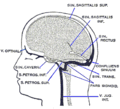
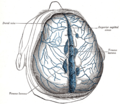
The Superior Sagittal Sinus (SSS) is a dural venous sinus of the brain that runs along the top of the skull, from the front to the back. It is an essential component of the venous system of the brain, playing a critical role in draining deoxygenated blood and cerebrospinal fluid (CSF) back into the systemic circulation. The anatomy, physiology, and clinical significance of the superior sagittal sinus are complex and integral to understanding various medical conditions that can affect the brain.
Anatomy[edit]
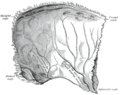
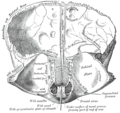
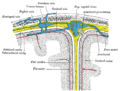
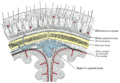
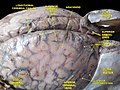
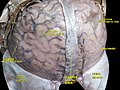
The superior sagittal sinus is located within the upper border of the falx cerebri, a sickle-shaped fold of dura mater that descends vertically in the longitudinal fissure between the two cerebral hemispheres. It begins near the crista galli of the ethmoid bone and extends posteriorly to the occipital bone, where it ends by draining into the transverse sinuses. The SSS varies in size and shape along its course, typically being triangular in cross-section anteriorly and becoming more flattened and broader as it progresses posteriorly.
Physiology[edit]
The primary function of the superior sagittal sinus is to collect blood from the cerebral veins, as well as cerebrospinal fluid (CSF) from the arachnoid granulations, and transport it to the transverse sinuses. From there, the blood eventually makes its way to the internal jugular vein and returns to the heart. This process is crucial for maintaining intracranial pressure and ensuring the proper circulation of blood and CSF within the brain.
Clinical Significance[edit]
Several medical conditions can affect the superior sagittal sinus, including thrombosis, meningitis, and traumatic brain injury (TBI).
- Thrombosis: Superior sagittal sinus thrombosis (SSST) is a rare but serious condition where a blood clot forms in the sinus, potentially leading to increased intracranial pressure, seizures, and other neurological deficits. It requires prompt diagnosis and treatment, typically with anticoagulants.
- Meningitis: Inflammation of the meninges, the protective membranes covering the brain and spinal cord, can spread to the superior sagittal sinus, affecting its ability to drain blood and CSF efficiently.
- Traumatic Brain Injury: Direct trauma to the skull can damage the superior sagittal sinus, leading to bleeding (hemorrhage) or the formation of blood clots, both of which can have serious neurological consequences.
Diagnosis and Treatment[edit]
Diagnosis of conditions affecting the superior sagittal sinus typically involves imaging techniques such as magnetic resonance imaging (MRI) or computed tomography (CT) scans, which can visualize the sinus and identify abnormalities. Treatment varies depending on the underlying condition but may include anticoagulation therapy for thrombosis, antibiotics for infections, or surgical intervention in cases of severe trauma.
Conclusion[edit]
The superior sagittal sinus plays a vital role in the venous drainage system of the brain. Understanding its anatomy and physiology is crucial for diagnosing and treating various neurological conditions that can impact this critical structure.
 | This medical article is a stub. You can help Wikipedia by adding missing information. |
-
 Superior sagittal sinus
 -
 Superior sagittal sinus
 -
 Superior sagittal sinus
 -
 Superior sagittal sinus
 -
 Superior sagittal sinus
 -
 Superior sagittal sinus
 -
 Superior sagittal sinus
 -
 Superior sagittal sinus
 -
 Superior sagittal sinus
 -
 Superior sagittal sinus
 -
 Superior sagittal sinus


Ad. Transform your health with W8MD Weight Loss, Sleep & MedSpa

Tired of being overweight?
Special offer:
Budget GLP-1 weight loss medications
- Semaglutide starting from $29.99/week and up with insurance for visit of $59.99 and up per week self pay.
- Tirzepatide starting from $45.00/week and up (dose dependent) or $69.99/week and up self pay
✔ Same-week appointments, evenings & weekends
Learn more:
- GLP-1 weight loss clinic NYC
- W8MD's NYC medical weight loss
- W8MD Philadelphia GLP-1 shots
- Philadelphia GLP-1 injections
- Affordable GLP-1 shots NYC
- Budget GLP-1 shots
|
WikiMD Medical Encyclopedia |
Medical Disclaimer: WikiMD is for informational purposes only and is not a substitute for professional medical advice. Content may be inaccurate or outdated and should not be used for diagnosis or treatment. Always consult your healthcare provider for medical decisions. Verify information with trusted sources such as CDC.gov and NIH.gov. By using this site, you agree that WikiMD is not liable for any outcomes related to its content. See full disclaimer.
Credits:Most images are courtesy of Wikimedia commons, and templates, categories Wikipedia, licensed under CC BY SA or similar.
Translate this page: - East Asian
中文,
日本,
한국어,
South Asian
हिन्दी,
தமிழ்,
తెలుగు,
Urdu,
ಕನ್ನಡ,
Southeast Asian
Indonesian,
Vietnamese,
Thai,
မြန်မာဘာသာ,
বাংলা
European
español,
Deutsch,
français,
Greek,
português do Brasil,
polski,
română,
русский,
Nederlands,
norsk,
svenska,
suomi,
Italian
Middle Eastern & African
عربى,
Turkish,
Persian,
Hebrew,
Afrikaans,
isiZulu,
Kiswahili,
Other
Bulgarian,
Hungarian,
Czech,
Swedish,
മലയാളം,
मराठी,
ਪੰਜਾਬੀ,
ગુજરાતી,
Portuguese,
Ukrainian
