Corpus spongiosum (penis)
Corpus Spongiosum is a mass of spongy tissue that surrounds the urethra within the penis in the male, and aids in ejaculation.
Anatomy[edit]
The Corpus Spongiosum is cylindrical in shape and begins at the bulb of the penis, extends along the underside of the penis and ends at the glans penis. It is surrounded by a layer of connective tissue known as the tunica albuginea. The urethra runs through the center of the corpus spongiosum, allowing for the passage of semen and urine.
Function[edit]
The primary function of the Corpus Spongiosum is to prevent the urethra from pinching closed, ensuring that semen and urine can be expelled. It also contributes to the rigidity of the erect penis and protects the urethra from potential injury during sexual activity.
Clinical significance[edit]
Conditions that can affect the Corpus Spongiosum include Erectile Dysfunction, Peyronie's Disease, and penile cancer. Treatment options vary depending on the specific condition and can range from medication to surgery.
See also[edit]

-
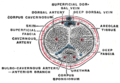 Diagram of the male urethra
 -
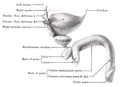 Anatomy of the penis
 -
 Illustration of the penis
 -
Diagram of the male urethra
-
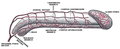 Cross-section of the penis
 -
 Anatomy of the male reproductive system
 -
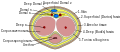 Cross-section of the penis
 -
 Structure of the penis
 -
 Anatomy of the penis
 -
 Ultrasound of a normal penis
 -
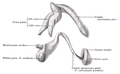 Anatomy of the penis


Ad. Transform your health with W8MD Weight Loss, Sleep & MedSpa

Tired of being overweight?
Special offer:
Budget GLP-1 weight loss medications
- Semaglutide starting from $29.99/week and up with insurance for visit of $59.99 and up per week self pay.
- Tirzepatide starting from $45.00/week and up (dose dependent) or $69.99/week and up self pay
✔ Same-week appointments, evenings & weekends
Learn more:
- GLP-1 weight loss clinic NYC
- W8MD's NYC medical weight loss
- W8MD Philadelphia GLP-1 shots
- Philadelphia GLP-1 injections
- Affordable GLP-1 shots NYC
|
WikiMD Medical Encyclopedia |
Medical Disclaimer: WikiMD is for informational purposes only and is not a substitute for professional medical advice. Content may be inaccurate or outdated and should not be used for diagnosis or treatment. Always consult your healthcare provider for medical decisions. Verify information with trusted sources such as CDC.gov and NIH.gov. By using this site, you agree that WikiMD is not liable for any outcomes related to its content. See full disclaimer.
Credits:Most images are courtesy of Wikimedia commons, and templates, categories Wikipedia, licensed under CC BY SA or similar.
Translate this page: - East Asian
中文,
日本,
한국어,
South Asian
हिन्दी,
தமிழ்,
తెలుగు,
Urdu,
ಕನ್ನಡ,
Southeast Asian
Indonesian,
Vietnamese,
Thai,
မြန်မာဘာသာ,
বাংলা
European
español,
Deutsch,
français,
Greek,
português do Brasil,
polski,
română,
русский,
Nederlands,
norsk,
svenska,
suomi,
Italian
Middle Eastern & African
عربى,
Turkish,
Persian,
Hebrew,
Afrikaans,
isiZulu,
Kiswahili,
Other
Bulgarian,
Hungarian,
Czech,
Swedish,
മലയാളം,
मराठी,
ਪੰਜਾਬੀ,
ગુજરાતી,
Portuguese,
Ukrainian
