Eugenia uniflora
Eugenia uniflora, also known as Pitanga, Surinam Cherry, or Brazilian Cherry, is a plant species in the family Myrtaceae, native to tropical South America’s east coast, ranging from Suriname, French Guiana to southern Brazil, and Uruguay.
Description[edit]
Eugenia uniflora is a large shrub or small tree with a conical form, growing slowly to 8 meters in height. The leaves are glossy green, up to 4 cm long, and produce a pungent smell when crushed. The flowers are small, white, and bear four petals. The fruit is a round to oval berry that is red to black, and has a tart, cherry-like flavor.
Cultivation and uses[edit]
Eugenia uniflora is widely cultivated for its fruit in warm parts of the world, including South and Central America, the Caribbean, southern Florida, and southern Texas. It is also grown as an ornamental plant for its attractive glossy foliage, and as a hedge or screen. In Brazil, the plant's leaves are used for medicinal purposes.
Ecology[edit]
The plant is a host for the larvae of the moth species Euselasia bettina and Euselasia hygenius. It is also a food source for various bird species, which help to disperse the plant's seeds.
See also[edit]
References[edit]
<references />


This South American plant related article is a stub. You can help WikiMD by expanding it.
-
 Eugenia uniflora fruit and leaves
 -
 Eugenia uniflora fruits
 -
 Eugenia uniflora
 -
Eugenia uniflora
-
Eugenia uniflora flower
-
 Eugenia uniflora young leaves
 -
 Eugenia uniflora, Pitanga
 -
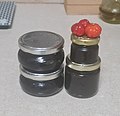 Eugenia uniflora jam


Ad. Transform your life with W8MD's
GLP-1 weight loss injections special from $29.99 with insurance
|
WikiMD Medical Encyclopedia |
Medical Disclaimer: WikiMD is for informational purposes only and is not a substitute for professional medical advice. Content may be inaccurate or outdated and should not be used for diagnosis or treatment. Always consult your healthcare provider for medical decisions. Verify information with trusted sources such as CDC.gov and NIH.gov. By using this site, you agree that WikiMD is not liable for any outcomes related to its content. See full disclaimer.
Credits:Most images are courtesy of Wikimedia commons, and templates, categories Wikipedia, licensed under CC BY SA or similar.
Translate this page: - East Asian
中文,
日本,
한국어,
South Asian
हिन्दी,
தமிழ்,
తెలుగు,
Urdu,
ಕನ್ನಡ,
Southeast Asian
Indonesian,
Vietnamese,
Thai,
မြန်မာဘာသာ,
বাংলা
European
español,
Deutsch,
français,
Greek,
português do Brasil,
polski,
română,
русский,
Nederlands,
norsk,
svenska,
suomi,
Italian
Middle Eastern & African
عربى,
Turkish,
Persian,
Hebrew,
Afrikaans,
isiZulu,
Kiswahili,
Other
Bulgarian,
Hungarian,
Czech,
Swedish,
മലയാളം,
मराठी,
ਪੰਜਾਬੀ,
ગુજરાતી,
Portuguese,
Ukrainian


