Oryza glaberrima
Oryza glaberrima, commonly known as African rice, is a species of rice native to West Africa. It is a member of the Oryza genus and is considered one of the two domesticated rice species, the other being Oryza sativa, or Asian rice.
History[edit]
Oryza glaberrima was domesticated in the inland delta of the Upper Niger River between Mali and Guinea, approximately 2000-1500 BC. It was cultivated by the early inhabitants of the region, who developed unique methods of cultivation that were well adapted to the challenging environment.
Cultivation[edit]
The cultivation of Oryza glaberrima is largely confined to West Africa. It is grown in flooded, lowland areas, similar to the cultivation of Oryza sativa. However, Oryza glaberrima is more tolerant of harsh conditions such as infertile soils, drought, and heavy rainfall, making it a valuable crop in regions where other rice species may not thrive.
Characteristics[edit]
Oryza glaberrima is a tall, robust plant that can reach up to 1.5 meters in height. It has long, slender leaves and a panicle that bears the rice grains. The grains of Oryza glaberrima are typically smaller and less polished than those of Oryza sativa, and they have a distinct, nutty flavor.
Importance[edit]
Despite its lower yield compared to Oryza sativa, Oryza glaberrima plays a crucial role in food security in West Africa. It is a staple food for many communities and is also used in traditional ceremonies and rituals. Moreover, its resilience to harsh conditions makes it an important crop in the face of climate change.
See also[edit]

-
 Oryza glaberrima seeds
 -
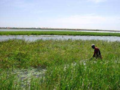 African rice in Niger
 -
 Map of River Niger
 -
 Carabane Digue
 -
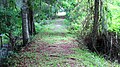 Hampton Plantation Rice Dike
 -
 Oryza glaberrima
 -
 Oryza glaberrima
 -
 Oryza glaberrima


Ad. Transform your life with W8MD's
GLP-1 weight loss injections special from $29.99 with insurance
|
WikiMD Medical Encyclopedia |
Medical Disclaimer: WikiMD is for informational purposes only and is not a substitute for professional medical advice. Content may be inaccurate or outdated and should not be used for diagnosis or treatment. Always consult your healthcare provider for medical decisions. Verify information with trusted sources such as CDC.gov and NIH.gov. By using this site, you agree that WikiMD is not liable for any outcomes related to its content. See full disclaimer.
Credits:Most images are courtesy of Wikimedia commons, and templates, categories Wikipedia, licensed under CC BY SA or similar.
Translate this page: - East Asian
中文,
日本,
한국어,
South Asian
हिन्दी,
தமிழ்,
తెలుగు,
Urdu,
ಕನ್ನಡ,
Southeast Asian
Indonesian,
Vietnamese,
Thai,
မြန်မာဘာသာ,
বাংলা
European
español,
Deutsch,
français,
Greek,
português do Brasil,
polski,
română,
русский,
Nederlands,
norsk,
svenska,
suomi,
Italian
Middle Eastern & African
عربى,
Turkish,
Persian,
Hebrew,
Afrikaans,
isiZulu,
Kiswahili,
Other
Bulgarian,
Hungarian,
Czech,
Swedish,
മലയാളം,
मराठी,
ਪੰਜਾਬੀ,
ગુજરાતી,
Portuguese,
Ukrainian
