Orbital gyri
Orbital gyri are a group of gyri located on the inferior surface of the frontal lobe in the human brain. They are part of the prefrontal cortex, which is involved in decision-making and executive functions. The term "orbital" refers to their location above the eye sockets (or orbits).
Etymology[edit]
The term "gyri" comes from the Greek word "gyrus" which means circle or ring. The term "orbital" is derived from the Latin word "orbita" which means track or path, referring to the location of these gyri above the orbits (eye sockets).
Structure[edit]
The orbital gyri are divided into three parts: the medial orbital gyrus, the anterior orbital gyrus, and the posterior orbital gyrus. These gyri are separated by the H-shaped orbital sulcus.
Function[edit]
The orbital gyri are involved in various cognitive functions, including decision-making, impulse control, and reward processing. They are also implicated in several psychiatric disorders, such as schizophrenia, bipolar disorder, and major depressive disorder.
Clinical significance[edit]
Damage to the orbital gyri can result in various neurological and psychiatric disorders. For example, lesions in this area can lead to orbitofrontal cortex syndrome, which is characterized by disinhibition, impulsivity, and socially inappropriate behavior.
See also[edit]
References[edit]
<references />
 | |
|---|---|
 |
 |
Orbital_gyri[edit]
-
 Cerebral gyri on the inferior surface
 -
 Gray's anatomy illustration of the orbital gyrus
 -
 Animation of the orbital gyrus
 -
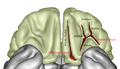 Basal view of the frontal lobe
 -
 Slide showing the orbital gyri
 -
 Orbital gyrus viewed from the bottom
 -
 Tuberculous leptomeningitis affecting the brain


Ad. Transform your life with W8MD's
GLP-1 weight loss injections special from $29.99 with insurance
|
WikiMD Medical Encyclopedia |
Medical Disclaimer: WikiMD is for informational purposes only and is not a substitute for professional medical advice. Content may be inaccurate or outdated and should not be used for diagnosis or treatment. Always consult your healthcare provider for medical decisions. Verify information with trusted sources such as CDC.gov and NIH.gov. By using this site, you agree that WikiMD is not liable for any outcomes related to its content. See full disclaimer.
Credits:Most images are courtesy of Wikimedia commons, and templates, categories Wikipedia, licensed under CC BY SA or similar.
Translate this page: - East Asian
中文,
日本,
한국어,
South Asian
हिन्दी,
தமிழ்,
తెలుగు,
Urdu,
ಕನ್ನಡ,
Southeast Asian
Indonesian,
Vietnamese,
Thai,
မြန်မာဘာသာ,
বাংলা
European
español,
Deutsch,
français,
Greek,
português do Brasil,
polski,
română,
русский,
Nederlands,
norsk,
svenska,
suomi,
Italian
Middle Eastern & African
عربى,
Turkish,
Persian,
Hebrew,
Afrikaans,
isiZulu,
Kiswahili,
Other
Bulgarian,
Hungarian,
Czech,
Swedish,
മലയാളം,
मराठी,
ਪੰਜਾਬੀ,
ગુજરાતી,
Portuguese,
Ukrainian
