Multituberculata
Multituberculata is an extinct order of rodent-like mammals that existed from the late Jurassic period to the early Oligocene, making them one of the longest-lived mammalian orders in the history of life on Earth. Their name, "Multituberculata," derives from the characteristic multi-cusped teeth that distinguish them from other mammals. These creatures are often considered to be among the most successful early mammals, having survived several mass extinction events, including the one that wiped out the dinosaurs at the end of the Cretaceous period.
Characteristics[edit]
Multituberculates were small to medium-sized mammals, with the majority of species being comparable in size to modern rodents. Their most distinctive feature was their dentition; the back teeth were multi-cusped and were used for chewing plant material, indicating a primarily herbivorous diet, although some species might have been omnivorous. Their skulls were low and elongated, with strong jaw muscles, suggesting they had a powerful bite. The body structure of multituberculates suggests they were agile animals, capable of climbing, jumping, and possibly burrowing.
Evolution and Diversity[edit]
The earliest known multituberculates appear in the fossil record in the late Jurassic, around 160 million years ago. They quickly diversified and spread across various continents, including North America, Europe, and Asia. Throughout their existence, they evolved into a wide range of species, with varying sizes, shapes, and ecological niches. The peak of their diversity occurred during the Cretaceous period, where they coexisted with dinosaurs and other prehistoric animals.
After the Cretaceous-Paleogene extinction event, multituberculates continued to thrive and diversify further during the Paleocene and Eocene epochs. They were among the dominant small herbivores of their time, filling ecological niches similar to those of modern rodents and lagomorphs. However, their diversity began to decline by the late Eocene, and the last known multituberculates disappeared in the early Oligocene, around 35 million years ago.
Extinction[edit]
The reasons behind the extinction of the Multituberculata remain a subject of scientific debate. It is generally believed that their decline was due to a combination of climate change and competition with emerging groups of mammals, particularly rodents, which may have outcompeted them in various ecological niches.
Fossil Record[edit]
Multituberculate fossils are found in a wide range of sedimentary environments, indicating they were adaptable animals capable of living in diverse habitats. Their fossils are particularly valuable for understanding the evolution of mammals through the Mesozoic and early Cenozoic eras.
Classification[edit]
The order Multituberculata is divided into two suborders: Plagiaulacida, which includes the earliest and most primitive forms, and Cimolodonta, which includes more derived and diverse species. These suborders are further divided into several families and genera, reflecting the wide diversity of multituberculate mammals.
Legacy[edit]
Despite their extinction, multituberculates have left a lasting legacy in the study of mammalian evolution. Their long evolutionary history and success across multiple geological periods provide valuable insights into the adaptability and resilience of early mammals. Their unique dental and skeletal features also contribute to our understanding of mammalian morphology and dietary evolution.

This article is a paleontology stub. You can help WikiMD by expanding it!
-
 Catopsbaatar catopsaloides
 -
 Taeniolabis
 -
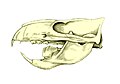 Ptilodus skull
 -
 American Jurassic Mammals
 -
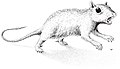 Catopsbaatar
 -
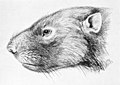 Taeniolabis taoensis
 -
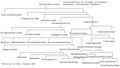 Multituberculata


Ad. Transform your life with W8MD's
GLP-1 weight loss injections special from $29.99 with insurance
|
WikiMD Medical Encyclopedia |
Medical Disclaimer: WikiMD is for informational purposes only and is not a substitute for professional medical advice. Content may be inaccurate or outdated and should not be used for diagnosis or treatment. Always consult your healthcare provider for medical decisions. Verify information with trusted sources such as CDC.gov and NIH.gov. By using this site, you agree that WikiMD is not liable for any outcomes related to its content. See full disclaimer.
Credits:Most images are courtesy of Wikimedia commons, and templates, categories Wikipedia, licensed under CC BY SA or similar.
Translate this page: - East Asian
中文,
日本,
한국어,
South Asian
हिन्दी,
தமிழ்,
తెలుగు,
Urdu,
ಕನ್ನಡ,
Southeast Asian
Indonesian,
Vietnamese,
Thai,
မြန်မာဘာသာ,
বাংলা
European
español,
Deutsch,
français,
Greek,
português do Brasil,
polski,
română,
русский,
Nederlands,
norsk,
svenska,
suomi,
Italian
Middle Eastern & African
عربى,
Turkish,
Persian,
Hebrew,
Afrikaans,
isiZulu,
Kiswahili,
Other
Bulgarian,
Hungarian,
Czech,
Swedish,
മലയാളം,
मराठी,
ਪੰਜਾਬੀ,
ગુજરાતી,
Portuguese,
Ukrainian
