Community health center
Community Health Center (CHC), also known as Community Clinic or Federally Qualified Health Center (FQHC) in the United States, is a type of healthcare facility designed to provide comprehensive primary care services in medically underserved areas. CHCs aim to improve access to healthcare for all individuals, regardless of their ability to pay, by offering services on a sliding fee scale based on income.
Overview[edit]
Community Health Centers are crucial components of the healthcare system, providing a broad range of services including primary care, preventive care, dental care, mental health services, and substance abuse treatment. They play a significant role in reducing health disparities and improving public health outcomes by offering high-quality, culturally competent care to populations that might otherwise lack access to healthcare.
History[edit]
The concept of Community Health Centers in the United States was inspired by the South African community health model established in the 1940s. The first CHC in the U.S. was founded in 1965 in Boston, Massachusetts, as part of the War on Poverty program initiated by President Lyndon B. Johnson. Since then, the CHC model has expanded nationwide, with thousands of centers serving millions of patients annually.
Services Provided[edit]
Community Health Centers offer a comprehensive range of services to meet the diverse needs of the communities they serve. These services typically include:
- Primary care for adults and children
- Preventive care including immunizations and health screenings
- Obstetrics and gynecology (OB/GYN)
- Pediatrics
- Dental care
- Mental health and counseling services
- Substance abuse treatment and counseling
- Pharmacy services
- Laboratory and X-ray services
Funding and Operation[edit]
CHCs are typically non-profit organizations that receive funding from a variety of sources, including federal and state grants, private donations, and patient fees. In the United States, the Health Resources and Services Administration (HRSA) oversees the federal funding and regulation of FQHCs. To qualify for federal funding, centers must meet specific criteria, including serving an underserved area or population, offering a sliding fee scale, providing comprehensive services, and being governed by a community board.
Challenges and Opportunities[edit]
Community Health Centers face numerous challenges, including funding constraints, workforce shortages, and the need to integrate with broader healthcare systems. However, they also have unique opportunities to innovate in the delivery of care, particularly in the use of telehealth, community outreach, and partnerships with other healthcare providers to expand their reach and impact.
Conclusion[edit]
Community Health Centers play a vital role in the healthcare system by providing accessible, high-quality care to underserved populations. Their comprehensive approach to health services, focus on preventive care, and commitment to community engagement make them an essential component of efforts to improve public health outcomes and reduce disparities in healthcare access.

-
 Kalasatama Health and Wellbeing Center, Helsinki
 -
 Jimenli Community Health Service Centre
 -
 Tsotylion Health Center
 -
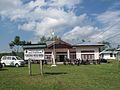 Puskesmas Watas Warga Curup Selatan
 -
 Valkyrie Road Primary Care Centre

.jpg)


Ad. Transform your life with W8MD's
GLP-1 weight loss injections special from $29.99 with insurance
|
WikiMD Medical Encyclopedia |
Medical Disclaimer: WikiMD is for informational purposes only and is not a substitute for professional medical advice. Content may be inaccurate or outdated and should not be used for diagnosis or treatment. Always consult your healthcare provider for medical decisions. Verify information with trusted sources such as CDC.gov and NIH.gov. By using this site, you agree that WikiMD is not liable for any outcomes related to its content. See full disclaimer.
Credits:Most images are courtesy of Wikimedia commons, and templates, categories Wikipedia, licensed under CC BY SA or similar.
Translate this page: - East Asian
中文,
日本,
한국어,
South Asian
हिन्दी,
தமிழ்,
తెలుగు,
Urdu,
ಕನ್ನಡ,
Southeast Asian
Indonesian,
Vietnamese,
Thai,
မြန်မာဘာသာ,
বাংলা
European
español,
Deutsch,
français,
Greek,
português do Brasil,
polski,
română,
русский,
Nederlands,
norsk,
svenska,
suomi,
Italian
Middle Eastern & African
عربى,
Turkish,
Persian,
Hebrew,
Afrikaans,
isiZulu,
Kiswahili,
Other
Bulgarian,
Hungarian,
Czech,
Swedish,
മലയാളം,
मराठी,
ਪੰਜਾਬੀ,
ગુજરાતી,
Portuguese,
Ukrainian
