Annona glabra
Annona glabra is a tropical fruit tree in the family Annonaceae, common in the Americas and Africa. It is best known for its fruit, the pond apple, which is a large, green fruit that is edible to both humans and animals.
Description[edit]
The Annona glabra tree can grow up to 12 meters tall. It has large, glossy leaves and large, fragrant flowers. The fruit is large, round, and green, with a sweet, custard-like pulp. The tree is often found in wet, swampy areas, hence its other common name, the swamp apple.
Distribution and habitat[edit]
Annona glabra is native to the tropical Americas, but it has been introduced to other tropical regions around the world. It is commonly found in Florida, the Caribbean, Central and South America, and West Africa. It prefers wet, swampy habitats, and is often found along riverbanks and in mangrove forests.
Uses[edit]
The fruit of the Annona glabra is edible and is often used in traditional medicine in various cultures. The pulp can be eaten raw or used to make jams and jellies. The seeds and leaves are also used in traditional medicine for a variety of ailments.
Conservation status[edit]
While not currently listed as threatened or endangered, the Annona glabra is considered a pest species in some areas where it has been introduced, due to its ability to outcompete native vegetation.
See also[edit]

-
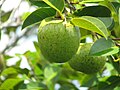 Annona glabra fruit
 -
 Alligator eating pond apple
 -
 Annona glabra leaves
 -
 Annona glabra in Florida
 -
 Annona glabra

.jpg)


Ad. Transform your life with W8MD's
GLP-1 weight loss injections special from $29.99 with insurance
|
WikiMD Medical Encyclopedia |
Medical Disclaimer: WikiMD is for informational purposes only and is not a substitute for professional medical advice. Content may be inaccurate or outdated and should not be used for diagnosis or treatment. Always consult your healthcare provider for medical decisions. Verify information with trusted sources such as CDC.gov and NIH.gov. By using this site, you agree that WikiMD is not liable for any outcomes related to its content. See full disclaimer.
Credits:Most images are courtesy of Wikimedia commons, and templates, categories Wikipedia, licensed under CC BY SA or similar.
Translate this page: - East Asian
中文,
日本,
한국어,
South Asian
हिन्दी,
தமிழ்,
తెలుగు,
Urdu,
ಕನ್ನಡ,
Southeast Asian
Indonesian,
Vietnamese,
Thai,
မြန်မာဘာသာ,
বাংলা
European
español,
Deutsch,
français,
Greek,
português do Brasil,
polski,
română,
русский,
Nederlands,
norsk,
svenska,
suomi,
Italian
Middle Eastern & African
عربى,
Turkish,
Persian,
Hebrew,
Afrikaans,
isiZulu,
Kiswahili,
Other
Bulgarian,
Hungarian,
Czech,
Swedish,
മലയാളം,
मराठी,
ਪੰਜਾਬੀ,
ગુજરાતી,
Portuguese,
Ukrainian
