Lung cancer staging
Lung cancer staging is a critical process used in determining the extent to which lung cancer has spread within the body. This staging is essential for guiding treatment decisions and predicting patient outcomes. The most commonly used system for staging lung cancer is the TNM system, which stands for Tumor, Node, Metastasis. This article provides an overview of the lung cancer staging process, including the TNM criteria and the stages of lung cancer.
TNM Classification[edit]
The TNM classification system is a globally recognized method for staging lung cancer, developed by the American Joint Committee on Cancer (AJCC) and the Union for International Cancer Control (UICC).
- Tumor (T): Describes the size and extent of the primary tumor. The T category is divided into several groups, from TX (primary tumor cannot be assessed) to T4 (a large tumor or a tumor that has spread to nearby structures).
- Node (N): Indicates whether the cancer has spread to nearby lymph nodes and the extent of this spread. It ranges from NX (cannot be assessed) to N3 (cancer has spread to lymph nodes far away from the original tumor).
- Metastasis (M): Describes whether the cancer has spread to distant parts of the body. M0 means there is no distant spread, while M1 indicates the presence of metastasis.
Stages of Lung Cancer[edit]
Based on the TNM classification, lung cancer is then grouped into stages that summarize the extent of the cancer. These stages range from Stage 0 (also known as carcinoma in situ) to Stage IV (cancer has spread to distant parts of the body).
- Stage 0 (Carcinoma in Situ): Abnormal cells are present only in the layer of cells in which they developed.
- Stage I: A small tumor that has not spread to any lymph nodes (divided into IA and IB based on size).
- Stage II: The cancer has spread to nearby lymph nodes or there is a larger tumor without lymph node involvement (divided into IIA and IIB).
- Stage III: Cancer has spread more extensively to nearby tissues or lymph nodes (divided into IIIA, IIIB, and IIIC depending on the extent of spread).
- Stage IV: The cancer has spread to distant parts of the body, such as other organs or distant lymph nodes.
Treatment and Prognosis[edit]
The stage of lung cancer at diagnosis is a key factor in determining the appropriate treatment approach, which may include surgery, radiation therapy, chemotherapy, targeted therapy, or a combination of these treatments. The stage also helps predict the likely course and outcome of the disease, with early-stage lung cancer generally having a better prognosis than advanced-stage lung cancer.
Conclusion[edit]
Lung cancer staging is a complex process that plays a crucial role in the management of lung cancer. Understanding the TNM classification and the stages of lung cancer helps healthcare professionals develop the most effective treatment plans and provides patients with important information about their condition.

-
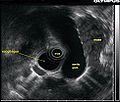 LUL mass radial EUS
 -
 LUL mass linear EUS
 -
 EUS Doppler mediastinal lymph node
 -
 EUS FNA mediastinal lymph node


Ad. Transform your health with W8MD Weight Loss, Sleep & MedSpa

Tired of being overweight?
Special offer:
Budget GLP-1 weight loss medications
- Semaglutide starting from $29.99/week and up with insurance for visit of $59.99 and up per week self pay.
- Tirzepatide starting from $45.00/week and up (dose dependent) or $69.99/week and up self pay
✔ Same-week appointments, evenings & weekends
Learn more:
- GLP-1 weight loss clinic NYC
- W8MD's NYC medical weight loss
- W8MD Philadelphia GLP-1 shots
- Philadelphia GLP-1 injections
- Affordable GLP-1 shots NYC
|
WikiMD Medical Encyclopedia |
Medical Disclaimer: WikiMD is for informational purposes only and is not a substitute for professional medical advice. Content may be inaccurate or outdated and should not be used for diagnosis or treatment. Always consult your healthcare provider for medical decisions. Verify information with trusted sources such as CDC.gov and NIH.gov. By using this site, you agree that WikiMD is not liable for any outcomes related to its content. See full disclaimer.
Credits:Most images are courtesy of Wikimedia commons, and templates, categories Wikipedia, licensed under CC BY SA or similar.
Translate this page: - East Asian
中文,
日本,
한국어,
South Asian
हिन्दी,
தமிழ்,
తెలుగు,
Urdu,
ಕನ್ನಡ,
Southeast Asian
Indonesian,
Vietnamese,
Thai,
မြန်မာဘာသာ,
বাংলা
European
español,
Deutsch,
français,
Greek,
português do Brasil,
polski,
română,
русский,
Nederlands,
norsk,
svenska,
suomi,
Italian
Middle Eastern & African
عربى,
Turkish,
Persian,
Hebrew,
Afrikaans,
isiZulu,
Kiswahili,
Other
Bulgarian,
Hungarian,
Czech,
Swedish,
മലയാളം,
मराठी,
ਪੰਜਾਬੀ,
ગુજરાતી,
Portuguese,
Ukrainian
