Gibbs free energy
Gibbs Free Energy (G), named after Josiah Willard Gibbs, is a thermodynamic quantity that measures the maximum amount of reversible work that can be performed by a thermodynamic system at a constant temperature and pressure. It is a central concept in the fields of Chemistry and Physics, particularly within the study of Thermodynamics and Physical Chemistry. The Gibbs free energy is a potential that predicts the direction of chemical reactions and phase changes.
Definition[edit]
The Gibbs free energy, G, is defined as:
- G = H - TS
where:
- H is the Enthalpy of the system,
- T is the Temperature in Kelvin,
- S is the Entropy of the system.
The change in Gibbs free energy, ΔG, during a process is given by:
- ΔG = ΔH - TΔS
where Δ signifies the change in the respective quantities. A negative ΔG indicates that a process is spontaneous, while a positive ΔG suggests that it is non-spontaneous under constant temperature and pressure.
Applications[edit]
Gibbs free energy has wide applications in both chemistry and physics. It is used to predict the spontaneity of reactions, determine the equilibrium position of chemical reactions, and understand phase changes. In Electrochemistry, the Gibbs free energy is related to the electromotive force of a galvanic cell and is crucial in designing batteries and fuel cells.
Gibbs Free Energy and Equilibrium[edit]
The condition for equilibrium in a chemical reaction is ΔG = 0. At equilibrium, the system's Gibbs free energy is at its minimum value, and there is no net change in the composition of the system. This principle is used to derive the Equilibrium Constant for chemical reactions.
Temperature Dependence[edit]
The sign and magnitude of ΔG depend on the temperature, as seen from the equation ΔG = ΔH - TΔS. This temperature dependence is crucial in processes like Protein Folding, where the balance between enthalpy and entropy determines the structure and stability of proteins.
Relation to Other Thermodynamic Quantities[edit]
Gibbs free energy is closely related to other thermodynamic quantities such as the Helmholtz Free Energy, which is used under conditions of constant volume. The relationship between Gibbs free energy and the Partition Function is fundamental in Statistical Mechanics, linking thermodynamics with microscopic properties of systems.
Conclusion[edit]
Understanding Gibbs free energy is essential for predicting the direction and extent of chemical reactions, designing energy-efficient systems, and exploring the fundamental principles of thermodynamics. Its application spans across various scientific disciplines, making it a cornerstone concept in the study of physical sciences.

This article is a thermodynamics-related stub. You can help WikiMD by expanding it!


Gibbs_free_energy[edit]
-
 Gibbs_free_energy
 -
 Gibbs free energy diagram
 -
 Gibbs-Helmholtz equation
 -
Thermodynamics Gibbs E0 Ecell pH
-
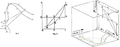 Gibbs-Maxwell surfaces


Ad. Transform your life with W8MD's
GLP-1 weight loss injections special from $29.99 with insurance
|
WikiMD Medical Encyclopedia |
Medical Disclaimer: WikiMD is for informational purposes only and is not a substitute for professional medical advice. Content may be inaccurate or outdated and should not be used for diagnosis or treatment. Always consult your healthcare provider for medical decisions. Verify information with trusted sources such as CDC.gov and NIH.gov. By using this site, you agree that WikiMD is not liable for any outcomes related to its content. See full disclaimer.
Credits:Most images are courtesy of Wikimedia commons, and templates, categories Wikipedia, licensed under CC BY SA or similar.
Translate this page: - East Asian
中文,
日本,
한국어,
South Asian
हिन्दी,
தமிழ்,
తెలుగు,
Urdu,
ಕನ್ನಡ,
Southeast Asian
Indonesian,
Vietnamese,
Thai,
မြန်မာဘာသာ,
বাংলা
European
español,
Deutsch,
français,
Greek,
português do Brasil,
polski,
română,
русский,
Nederlands,
norsk,
svenska,
suomi,
Italian
Middle Eastern & African
عربى,
Turkish,
Persian,
Hebrew,
Afrikaans,
isiZulu,
Kiswahili,
Other
Bulgarian,
Hungarian,
Czech,
Swedish,
മലയാളം,
मराठी,
ਪੰਜਾਬੀ,
ગુજરાતી,
Portuguese,
Ukrainian

