Gnetum africanum
Gnetum africanum is a tropical evergreen vine native to Africa and Asia. It is part of the Gnetaceae family and is commonly known as Afang in Nigeria and Eru in Cameroon. The plant is a source of food and traditional medicines in its native regions.
Description[edit]
Gnetum africanum is a climbing vine that can grow up to 40 feet in length. The leaves are dark green, glossy, and oval in shape. The plant produces small, yellow flowers and a fruit that is red when ripe.
Cultivation[edit]
Gnetum africanum is a tropical plant and requires a warm, humid environment to thrive. It is typically grown in rainforests or in shaded areas near rivers and streams. The plant is propagated through seeds or cuttings.
Uses[edit]
The leaves of Gnetum africanum are used in the preparation of a popular soup known as Afang soup in Nigeria and Eru soup in Cameroon. The leaves are also used in traditional medicine to treat various ailments such as malaria, hypertension, and infertility.
Conservation[edit]
Gnetum africanum is currently listed as an endangered species by the International Union for Conservation of Nature (IUCN). The main threats to the species are deforestation and over-harvesting for food and medicine.
See also[edit]


-
 Gnetum africanum leaves bundle and chopped
 -
 Ikok mixé et son manioc vapeur
 -
 Exposition vente des femmes
 -
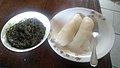 Water fufu and eru


Ad. Transform your life with W8MD's
GLP-1 weight loss injections special from $29.99 with insurance
|
WikiMD Medical Encyclopedia |
Medical Disclaimer: WikiMD is for informational purposes only and is not a substitute for professional medical advice. Content may be inaccurate or outdated and should not be used for diagnosis or treatment. Always consult your healthcare provider for medical decisions. Verify information with trusted sources such as CDC.gov and NIH.gov. By using this site, you agree that WikiMD is not liable for any outcomes related to its content. See full disclaimer.
Credits:Most images are courtesy of Wikimedia commons, and templates, categories Wikipedia, licensed under CC BY SA or similar.
Translate this page: - East Asian
中文,
日本,
한국어,
South Asian
हिन्दी,
தமிழ்,
తెలుగు,
Urdu,
ಕನ್ನಡ,
Southeast Asian
Indonesian,
Vietnamese,
Thai,
မြန်မာဘာသာ,
বাংলা
European
español,
Deutsch,
français,
Greek,
português do Brasil,
polski,
română,
русский,
Nederlands,
norsk,
svenska,
suomi,
Italian
Middle Eastern & African
عربى,
Turkish,
Persian,
Hebrew,
Afrikaans,
isiZulu,
Kiswahili,
Other
Bulgarian,
Hungarian,
Czech,
Swedish,
മലയാളം,
मराठी,
ਪੰਜਾਬੀ,
ગુજરાતી,
Portuguese,
Ukrainian
