Isotope-ratio mass spectrometry
Isotope-ratio mass spectrometry (IRMS) is an analytical technique used to measure the relative abundance of isotopes in a given sample. This method is crucial in various scientific fields, including geochemistry, environmental science, forensic science, and biogeochemistry, as it allows for the precise analysis of the isotopic composition of different elements. IRMS works by ionizing sample molecules and separating the resulting ions based on their mass-to-charge ratio. This separation is crucial for determining the isotopic signature of the sample, which can provide valuable information about its origin, age, or the processes it has undergone.
Principles of Operation[edit]
The core principle behind IRMS involves the ionization of a sample to produce charged particles or ions. These ions are then accelerated and passed through a magnetic field, which separates them based on their mass-to-charge ratio. Since isotopes of the same element have slightly different masses due to the difference in the number of neutrons, they can be distinguished and measured separately. The relative abundance of these isotopes is then calculated, providing insights into the sample's characteristics or history.
Applications[edit]
IRMS has a wide range of applications across various scientific disciplines:
- In geochemistry, it is used to analyze isotopic ratios in rocks and minerals to understand geological processes and the Earth's history.
- In environmental science, IRMS helps in tracing pollution sources and studying global climate change by measuring isotopic signatures in air, water, and soil samples.
- In forensic science, isotopic analysis can link samples to their geographical origin, aiding in criminal investigations.
- In biogeochemistry, IRMS is employed to study nutrient cycles by analyzing isotopic compositions in biological materials.
Types of IRMS[edit]
There are several types of isotope-ratio mass spectrometers, each designed for specific applications:
- Gas source mass spectrometry is used for gases like carbon dioxide or nitrogen, where the sample is introduced in gaseous form.
- Thermal ionization mass spectrometry (TIMS) involves the ionization of a sample by heating, suitable for solid samples.
- Secondary ion mass spectrometry (SIMS) allows for the analysis of solid surfaces by sputtering the surface with a primary ion beam and analyzing the ejected secondary ions.
Challenges and Limitations[edit]
While IRMS is a powerful tool, it faces several challenges, including the need for highly purified samples to avoid contamination and the requirement for sophisticated, expensive equipment. Additionally, the interpretation of isotopic data can be complex and requires a deep understanding of the processes influencing isotopic ratios.
Conclusion[edit]
Isotope-ratio mass spectrometry is a vital analytical technique that has significantly advanced our understanding of the natural world. Its ability to precisely measure isotopic ratios in various samples has applications in numerous scientific fields, contributing to our knowledge of environmental processes, geological history, and forensic investigations.

-
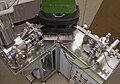 Thermal ionization mass spectrometer
 -
 Mass spectrometer schematic
 -
 Isotope-ratio mass spectrometry
 -
SHRIMP diagram
-
 1 MV accelerator mass spectrometer


Ad. Transform your health with W8MD Weight Loss, Sleep & MedSpa

Tired of being overweight?
Special offer:
Budget GLP-1 weight loss medications
- Semaglutide starting from $29.99/week and up with insurance for visit of $59.99 and up per week self pay.
- Tirzepatide starting from $45.00/week and up (dose dependent) or $69.99/week and up self pay
✔ Same-week appointments, evenings & weekends
Learn more:
- GLP-1 weight loss clinic NYC
- W8MD's NYC medical weight loss
- W8MD Philadelphia GLP-1 shots
- Philadelphia GLP-1 injections
- Affordable GLP-1 shots NYC
|
WikiMD Medical Encyclopedia |
Medical Disclaimer: WikiMD is for informational purposes only and is not a substitute for professional medical advice. Content may be inaccurate or outdated and should not be used for diagnosis or treatment. Always consult your healthcare provider for medical decisions. Verify information with trusted sources such as CDC.gov and NIH.gov. By using this site, you agree that WikiMD is not liable for any outcomes related to its content. See full disclaimer.
Credits:Most images are courtesy of Wikimedia commons, and templates, categories Wikipedia, licensed under CC BY SA or similar.
Translate this page: - East Asian
中文,
日本,
한국어,
South Asian
हिन्दी,
தமிழ்,
తెలుగు,
Urdu,
ಕನ್ನಡ,
Southeast Asian
Indonesian,
Vietnamese,
Thai,
မြန်မာဘာသာ,
বাংলা
European
español,
Deutsch,
français,
Greek,
português do Brasil,
polski,
română,
русский,
Nederlands,
norsk,
svenska,
suomi,
Italian
Middle Eastern & African
عربى,
Turkish,
Persian,
Hebrew,
Afrikaans,
isiZulu,
Kiswahili,
Other
Bulgarian,
Hungarian,
Czech,
Swedish,
മലയാളം,
मराठी,
ਪੰਜਾਬੀ,
ગુજરાતી,
Portuguese,
Ukrainian

