Mechanotransduction
Mechanotransduction refers to the process by which cells convert mechanical stimulus into electrochemical activity. This process is crucial in various biological functions, including tissue development, cell growth, and cell migration.
Overview[edit]
Mechanotransduction involves the conversion of mechanical forces into biochemical signals, which then trigger a series of cellular responses. This process is facilitated by proteins known as mechanosensitive channels, which open or close in response to mechanical stress, allowing ions to flow across the cell membrane.
Mechanisms[edit]
The primary mechanism of mechanotransduction involves the activation of mechanosensitive channels. These channels are embedded in the cell membrane, and their conformation changes in response to mechanical forces. This change in conformation allows ions to flow across the membrane, generating an electrical signal that can be transmitted to other parts of the cell.
Another mechanism involves the cytoskeleton, a network of protein filaments that provides structural support to the cell. Mechanical forces can deform the cytoskeleton, leading to changes in the activity of enzymes and other proteins that are attached to it.
Role in Disease[edit]
Abnormal mechanotransduction can lead to various diseases, including cardiovascular disease, cancer, and osteoarthritis. For example, in cardiovascular disease, abnormal mechanotransduction can lead to the formation of atherosclerotic plaques, which can block blood vessels and cause heart attacks or strokes.
Research[edit]
Research in mechanotransduction is focused on understanding the molecular mechanisms involved in this process, as well as developing therapies to treat diseases associated with abnormal mechanotransduction. This research has potential applications in various fields, including regenerative medicine, drug discovery, and biomaterials.
See Also[edit]

-
 Mechanotransduction
 -
 Mechanically Gated Channel
 -
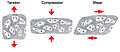 Cartilage Forces
 -
 Chondrocyte Receptors


Ad. Transform your health with W8MD Weight Loss, Sleep & MedSpa

Tired of being overweight?
Special offer:
Budget GLP-1 weight loss medications
- Semaglutide starting from $29.99/week and up with insurance for visit of $59.99 and up per week self pay.
- Tirzepatide starting from $45.00/week and up (dose dependent) or $69.99/week and up self pay
✔ Same-week appointments, evenings & weekends
Learn more:
- GLP-1 weight loss clinic NYC
- W8MD's NYC medical weight loss
- W8MD Philadelphia GLP-1 shots
- Philadelphia GLP-1 injections
- Affordable GLP-1 shots NYC
|
WikiMD Medical Encyclopedia |
Medical Disclaimer: WikiMD is for informational purposes only and is not a substitute for professional medical advice. Content may be inaccurate or outdated and should not be used for diagnosis or treatment. Always consult your healthcare provider for medical decisions. Verify information with trusted sources such as CDC.gov and NIH.gov. By using this site, you agree that WikiMD is not liable for any outcomes related to its content. See full disclaimer.
Credits:Most images are courtesy of Wikimedia commons, and templates, categories Wikipedia, licensed under CC BY SA or similar.
Translate this page: - East Asian
中文,
日本,
한국어,
South Asian
हिन्दी,
தமிழ்,
తెలుగు,
Urdu,
ಕನ್ನಡ,
Southeast Asian
Indonesian,
Vietnamese,
Thai,
မြန်မာဘာသာ,
বাংলা
European
español,
Deutsch,
français,
Greek,
português do Brasil,
polski,
română,
русский,
Nederlands,
norsk,
svenska,
suomi,
Italian
Middle Eastern & African
عربى,
Turkish,
Persian,
Hebrew,
Afrikaans,
isiZulu,
Kiswahili,
Other
Bulgarian,
Hungarian,
Czech,
Swedish,
മലയാളം,
मराठी,
ਪੰਜਾਬੀ,
ગુજરાતી,
Portuguese,
Ukrainian
