Ligand binding assay
Ligand Binding Assay is a biochemical method used in molecular biology, biochemistry, and pharmacology to measure the interaction between a protein and a ligand. This method is commonly used to evaluate the affinity and specificity of a ligand for a protein, which is crucial in drug discovery and development.
Overview[edit]
A ligand binding assay involves the use of a protein, usually a receptor, and a ligand, which can be a small molecule, peptide, or another protein. The ligand is often labeled with a radioisotope, fluorescent dye, or enzyme to allow detection and quantification of the binding. The binding of the ligand to the protein can be measured directly or indirectly, depending on the type of assay used.
Types of Ligand Binding Assays[edit]
There are several types of ligand binding assays, including:
- Radioligand Binding Assay: This is a type of ligand binding assay that uses a radiolabeled ligand. The binding of the radioligand to the protein is measured by detecting the radioactivity.
- Fluorescence Resonance Energy Transfer (FRET): In this type of assay, the ligand and the protein are labeled with different fluorescent dyes. When the ligand binds to the protein, the energy transfer between the dyes can be measured.
- Surface Plasmon Resonance (SPR): This is a label-free technique that measures the change in refractive index on a sensor surface when the ligand binds to the protein.
Applications[edit]
Ligand binding assays are widely used in various fields, including:
- Drug Discovery: Ligand binding assays are crucial in the early stages of drug discovery to identify potential drug candidates that can bind to a target protein with high affinity and specificity.
- Pharmacology: In pharmacology, ligand binding assays are used to study the interaction between drugs and their target proteins.
- Biochemistry: In biochemistry, these assays are used to study the function of proteins and their interaction with other molecules.
See Also[edit]
.svg) | This biochemistry article is a stub. You can help Wikipedia by adding missing information. |
 | This molecular biology article is a stub. You can help Wikipedia by adding missing information. |

-
 Ligand binding assay
 -
 Ligand binding assay
 -
 Ligand binding assay
 -
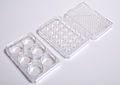 Ligand binding assay
 -
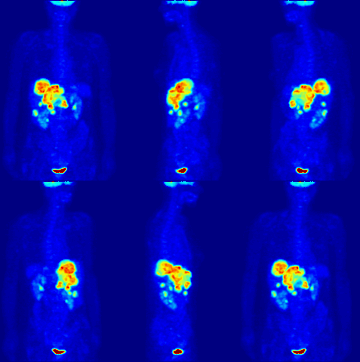 Ligand binding assay


.jpg)


Medical Disclaimer: WikiMD is for informational purposes only and is not a substitute for professional medical advice. Content may be inaccurate or outdated and should not be used for diagnosis or treatment. Always consult your healthcare provider for medical decisions. Verify information with trusted sources such as CDC.gov and NIH.gov. By using this site, you agree that WikiMD is not liable for any outcomes related to its content. See full disclaimer.
Credits:Most images are courtesy of Wikimedia commons, and templates, categories Wikipedia, licensed under CC BY SA or similar.
Translate this page: - East Asian
中文,
日本,
한국어,
South Asian
हिन्दी,
தமிழ்,
తెలుగు,
Urdu,
ಕನ್ನಡ,
Southeast Asian
Indonesian,
Vietnamese,
Thai,
မြန်မာဘာသာ,
বাংলা
European
español,
Deutsch,
français,
Greek,
português do Brasil,
polski,
română,
русский,
Nederlands,
norsk,
svenska,
suomi,
Italian
Middle Eastern & African
عربى,
Turkish,
Persian,
Hebrew,
Afrikaans,
isiZulu,
Kiswahili,
Other
Bulgarian,
Hungarian,
Czech,
Swedish,
മലയാളം,
मराठी,
ਪੰਜਾਬੀ,
ગુજરાતી,
Portuguese,
Ukrainian
