Channel blocker
Channel Blocker[edit]
A channel blocker is a type of medication that works by blocking specific channels in the body, thereby affecting the flow of ions or other substances. These blockers are commonly used in the treatment of various medical conditions, including heart disease, high blood pressure, and certain types of arrhythmias.
Mechanism of Action[edit]
Channel blockers work by binding to specific channels in cell membranes, preventing the passage of ions through these channels. By blocking the flow of ions, these medications can alter the electrical activity of cells and tissues, leading to various physiological effects.
Types of Channel Blockers[edit]
There are several types of channel blockers, each targeting different channels in the body. Some common types include:
- Calcium Channel Blockers: These medications block calcium channels in the heart and blood vessels, leading to relaxation of blood vessels and decreased heart rate.
- Sodium Channel Blockers: These medications block sodium channels in nerve cells, affecting the transmission of electrical signals and reducing excitability.
- Potassium Channel Blockers: These medications block potassium channels in the heart, affecting the repolarization of cardiac cells and regulating heart rhythm.
Medical Uses[edit]
Channel blockers are used in the treatment of various medical conditions, including:
- Hypertension: Calcium channel blockers are commonly prescribed to lower blood pressure by relaxing blood vessels.
- Arrhythmias: Sodium channel blockers are used to treat certain types of irregular heart rhythms.
- Angina: Calcium channel blockers can help relieve chest pain by dilating coronary arteries.
- Migraines: Some potassium channel blockers are used in the prevention of migraines.
Side Effects[edit]
Like all medications, channel blockers can cause side effects. Common side effects may include dizziness, fatigue, constipation, and low blood pressure. It is important to consult a healthcare provider before starting any new medication.
 | This medical article is a stub. You can help Wikipedia by adding missing information. |
-
 Tetrodotoxin structure
 -
 Potassium Channel Mechanisms
 -
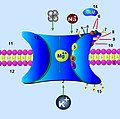 NMDA receptor


Ad. Transform your health with W8MD Weight Loss, Sleep & MedSpa

Tired of being overweight?
Special offer:
Budget GLP-1 weight loss medications
- Semaglutide starting from $29.99/week and up with insurance for visit of $59.99 and up per week self pay.
- Tirzepatide starting from $45.00/week and up (dose dependent) or $69.99/week and up self pay
✔ Same-week appointments, evenings & weekends ✔ Tele visits available with certain limitations Learn more:
- GLP-1 weight loss clinic NYC
- W8MD's NYC medical weight loss
- W8MD Philadelphia GLP-1 shots
- Philadelphia GLP-1 injections
- Affordable GLP-1 shots NYC
- Budget GLP-1 shots
|
WikiMD Medical Encyclopedia |
Medical Disclaimer: WikiMD is for informational purposes only and is not a substitute for professional medical advice. Content may be inaccurate or outdated and should not be used for diagnosis or treatment. Always consult your healthcare provider for medical decisions. Verify information with trusted sources such as CDC.gov and NIH.gov. By using this site, you agree that WikiMD is not liable for any outcomes related to its content. See full disclaimer.
Credits:Most images are courtesy of Wikimedia commons, and templates, categories Wikipedia, licensed under CC BY SA or similar.
Translate this page: - East Asian
中文,
日本,
한국어,
South Asian
हिन्दी,
தமிழ்,
తెలుగు,
Urdu,
ಕನ್ನಡ,
Southeast Asian
Indonesian,
Vietnamese,
Thai,
မြန်မာဘာသာ,
বাংলা
European
español,
Deutsch,
français,
Greek,
português do Brasil,
polski,
română,
русский,
Nederlands,
norsk,
svenska,
suomi,
Italian
Middle Eastern & African
عربى,
Turkish,
Persian,
Hebrew,
Afrikaans,
isiZulu,
Kiswahili,
Other
Bulgarian,
Hungarian,
Czech,
Swedish,
മലയാളം,
मराठी,
ਪੰਜਾਬੀ,
ગુજરાતી,
Portuguese,
Ukrainian
