Pericyclic reaction
Pericyclic reactions are a class of organic chemical reactions that proceed via a concerted mechanism through a cyclic transition state. These reactions are characterized by the redistribution of electrons in a cyclic manner, without the involvement of intermediates. Pericyclic reactions are governed by orbital symmetry and can be predicted by the Woodward-Hoffmann rules. They play a crucial role in the synthesis of complex organic molecules and are widely used in synthetic chemistry, pharmaceutical chemistry, and material science.
Types of Pericyclic Reactions[edit]
Pericyclic reactions can be classified into several types based on the nature of the electron shifts and the resulting products. The main types include:
- Cycloaddition: A reaction where two or more unsaturated molecules (or parts of the same molecule) combine to form a cyclic adduct. The Diels-Alder reaction, a [4+2] cycloaddition, is a prominent example.
- Electrocyclic reaction: A reaction in which a pi-bonded molecule closes to form a cyclic molecule or a cyclic molecule opens to form a pi-bonded molecule, depending on the conditions. The reaction can be either conrotatory or disrotatory, determining the stereochemistry of the product.
- Sigmatropic rearrangement: A reaction where a sigma bond adjacent to one or more pi systems migrates over a pi system to a new position, resulting in a rearranged product. The Cope rearrangement and the Claisen rearrangement are examples of sigmatropic rearrangements.
- Cheletropic reaction: A reaction in which a small molecule, such as sulfur dioxide or carbon monoxide, is added to or removed from a double or triple bond to form a five- or six-membered ring.
Mechanism and Orbital Symmetry[edit]
The mechanism of pericyclic reactions involves the concerted movement of electrons through a cyclic transition state. This process is highly dependent on the symmetry of the molecular orbitals involved in the reaction. The Woodward-Hoffmann rules, developed by Robert Burns Woodward and Roald Hoffmann, provide a framework for predicting the feasibility and stereochemistry of pericyclic reactions based on the conservation of orbital symmetry.
Applications[edit]
Pericyclic reactions are utilized in the synthesis of a wide variety of complex organic compounds, including natural products, pharmaceuticals, and polymers. Their ability to form multiple bonds in a single step, with high stereocontrol, makes them invaluable tools in synthetic organic chemistry.
Challenges and Developments[edit]
While pericyclic reactions offer many advantages, they also present challenges, such as the need for precise control over reaction conditions and the prediction of product stereochemistry. Recent developments in computational chemistry and the advent of new catalytic methods have led to improved predictability and expanded the scope of pericyclic reactions.
See Also[edit]

-
 Cycloheptatriene to Norcaradiene Rearrangement
 -
 Pericyclic Reaction Arrow Pushing
 -
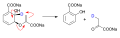 Isochorismate Pyruvate Lyase Reaction


Ad. Transform your health with W8MD Weight Loss, Sleep & MedSpa

Tired of being overweight?
Special offer:
Budget GLP-1 weight loss medications
- Semaglutide starting from $29.99/week and up with insurance for visit of $59.99 and up per week self pay.
- Tirzepatide starting from $45.00/week and up (dose dependent) or $69.99/week and up self pay
✔ Same-week appointments, evenings & weekends
Learn more:
- GLP-1 weight loss clinic NYC
- W8MD's NYC medical weight loss
- W8MD Philadelphia GLP-1 shots
- Philadelphia GLP-1 injections
- Affordable GLP-1 shots NYC
|
WikiMD Medical Encyclopedia |
Medical Disclaimer: WikiMD is for informational purposes only and is not a substitute for professional medical advice. Content may be inaccurate or outdated and should not be used for diagnosis or treatment. Always consult your healthcare provider for medical decisions. Verify information with trusted sources such as CDC.gov and NIH.gov. By using this site, you agree that WikiMD is not liable for any outcomes related to its content. See full disclaimer.
Credits:Most images are courtesy of Wikimedia commons, and templates, categories Wikipedia, licensed under CC BY SA or similar.
Translate this page: - East Asian
中文,
日本,
한국어,
South Asian
हिन्दी,
தமிழ்,
తెలుగు,
Urdu,
ಕನ್ನಡ,
Southeast Asian
Indonesian,
Vietnamese,
Thai,
မြန်မာဘာသာ,
বাংলা
European
español,
Deutsch,
français,
Greek,
português do Brasil,
polski,
română,
русский,
Nederlands,
norsk,
svenska,
suomi,
Italian
Middle Eastern & African
عربى,
Turkish,
Persian,
Hebrew,
Afrikaans,
isiZulu,
Kiswahili,
Other
Bulgarian,
Hungarian,
Czech,
Swedish,
മലയാളം,
मराठी,
ਪੰਜਾਬੀ,
ગુજરાતી,
Portuguese,
Ukrainian
