Fridericia chica
Fridericia chica (Bignoniaceae) is a species of flowering plant native to the tropical regions of South America, including the Amazon rainforest. It is commonly known as Chica, Crajiru, or Carajuru. This plant has been traditionally used by indigenous peoples for its medicinal properties and as a natural dye. The leaves, bark, and roots of Fridericia chica are utilized in various traditional medicine practices to treat a range of ailments.
Description[edit]
Fridericia chica is a climbing shrub that can reach up to several meters in height. It has compound leaves and produces clusters of vibrant red or pink flowers, which are followed by fruit in the form of elongated capsules containing winged seeds. The plant's distinctive coloration is due to the presence of pigments known as anthocyanins, which have been studied for their potential health benefits.
Traditional Uses[edit]
Traditionally, Fridericia chica has been used by indigenous communities for its healing properties. The leaves, when crushed, produce a red pigment that has been used for body painting, as a fabric dye, and in rituals. Medicinally, it has been used to treat skin conditions, wounds, and as an anti-inflammatory agent. Infusions made from the leaves or bark are used to treat gastrointestinal issues, fevers, and as a general tonic.
Phytochemistry[edit]
The phytochemical analysis of Fridericia chica has revealed the presence of a variety of bioactive compounds, including flavonoids, tannins, and anthocyanins. These compounds are believed to contribute to the plant's medicinal properties, offering antioxidant, anti-inflammatory, and antimicrobial effects.
Research and Potential Health Benefits[edit]
Recent scientific research has focused on investigating the potential health benefits of Fridericia chica. Studies have explored its antioxidant capacity, its role in wound healing, and its effects on various diseases. While promising, much of this research is still in the early stages, and more studies are needed to fully understand the medicinal potential of this plant.
Conservation[edit]
As with many plants native to the Amazon rainforest, Fridericia chica faces threats from deforestation and habitat destruction. Efforts to conserve its natural habitat are crucial for ensuring its survival and the continuation of the traditional knowledge associated with its use.
See Also[edit]

-
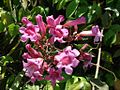 Fridericia chica flower
 -
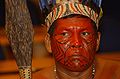 Fridericia chica


Ad. Transform your health with W8MD Weight Loss, Sleep & MedSpa

Tired of being overweight?
Special offer:
Budget GLP-1 weight loss medications
- Semaglutide starting from $29.99/week and up with insurance for visit of $59.99 and up per week self pay.
- Tirzepatide starting from $45.00/week and up (dose dependent) or $69.99/week and up self pay
✔ Same-week appointments, evenings & weekends
Learn more:
- GLP-1 weight loss clinic NYC
- W8MD's NYC medical weight loss
- W8MD Philadelphia GLP-1 shots
- Philadelphia GLP-1 injections
- Affordable GLP-1 shots NYC
|
WikiMD Medical Encyclopedia |
Medical Disclaimer: WikiMD is for informational purposes only and is not a substitute for professional medical advice. Content may be inaccurate or outdated and should not be used for diagnosis or treatment. Always consult your healthcare provider for medical decisions. Verify information with trusted sources such as CDC.gov and NIH.gov. By using this site, you agree that WikiMD is not liable for any outcomes related to its content. See full disclaimer.
Credits:Most images are courtesy of Wikimedia commons, and templates, categories Wikipedia, licensed under CC BY SA or similar.
Translate this page: - East Asian
中文,
日本,
한국어,
South Asian
हिन्दी,
தமிழ்,
తెలుగు,
Urdu,
ಕನ್ನಡ,
Southeast Asian
Indonesian,
Vietnamese,
Thai,
မြန်မာဘာသာ,
বাংলা
European
español,
Deutsch,
français,
Greek,
português do Brasil,
polski,
română,
русский,
Nederlands,
norsk,
svenska,
suomi,
Italian
Middle Eastern & African
عربى,
Turkish,
Persian,
Hebrew,
Afrikaans,
isiZulu,
Kiswahili,
Other
Bulgarian,
Hungarian,
Czech,
Swedish,
മലയാളം,
मराठी,
ਪੰਜਾਬੀ,
ગુજરાતી,
Portuguese,
Ukrainian
