Hymenolepis nana
Hymenolepis nana, also known as the dwarf tapeworm, is a species of parasite that is the most common tapeworm infecting humans, especially children. It is found worldwide and is particularly prevalent in areas with poor sanitation and hygiene practices.
Life Cycle[edit]
The life cycle of Hymenolepis nana involves an intermediate host, typically a grain beetle, and a definitive host, which is a mammal such as a human or rodent. The eggs of the tapeworm are ingested by the intermediate host, where they hatch into larvae. The larvae then develop into cysticercoids, which are ingested by the definitive host. Once inside the definitive host, the cysticercoids develop into adult tapeworms and attach to the intestinal wall, where they produce eggs that are excreted in the feces.
Infection and Symptoms[edit]
Infection with Hymenolepis nana is known as hymenolepiasis. It occurs when a person ingests food or water contaminated with the eggs of the tapeworm. The eggs hatch in the small intestine and the larvae attach to the intestinal wall, where they develop into adult tapeworms. Symptoms of hymenolepiasis can include abdominal pain, diarrhea, loss of appetite, weight loss, and malnutrition. In severe cases, the infection can cause complications such as intestinal obstruction and peritonitis.
Diagnosis and Treatment[edit]
Diagnosis of Hymenolepis nana infection is typically made by examining a stool sample under a microscope for the presence of tapeworm eggs. Treatment usually involves a course of antiparasitic medication, such as praziquantel or niclosamide. Good hygiene practices, such as regular hand washing and proper food preparation, can help prevent infection.
Epidemiology[edit]
Hymenolepis nana is found worldwide, but is most common in areas with poor sanitation and hygiene practices. It is particularly prevalent in developing countries and in areas where people live in close contact with rodents.
See Also[edit]
References[edit]
<references />


-
 Hymenolepis nana life cycle illustration
 -
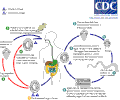 Hymenolepis nana life cycle diagram
 -
 Hymenolepis nana egg


Ad. Transform your health with W8MD Weight Loss, Sleep & MedSpa

Tired of being overweight?
Special offer:
Budget GLP-1 weight loss medications
- Semaglutide starting from $29.99/week and up with insurance for visit of $59.99 and up per week self pay.
- Tirzepatide starting from $45.00/week and up (dose dependent) or $69.99/week and up self pay
✔ Same-week appointments, evenings & weekends
Learn more:
- GLP-1 weight loss clinic NYC
- W8MD's NYC medical weight loss
- W8MD Philadelphia GLP-1 shots
- Philadelphia GLP-1 injections
- Affordable GLP-1 shots NYC
|
WikiMD Medical Encyclopedia |
Medical Disclaimer: WikiMD is for informational purposes only and is not a substitute for professional medical advice. Content may be inaccurate or outdated and should not be used for diagnosis or treatment. Always consult your healthcare provider for medical decisions. Verify information with trusted sources such as CDC.gov and NIH.gov. By using this site, you agree that WikiMD is not liable for any outcomes related to its content. See full disclaimer.
Credits:Most images are courtesy of Wikimedia commons, and templates, categories Wikipedia, licensed under CC BY SA or similar.
Translate this page: - East Asian
中文,
日本,
한국어,
South Asian
हिन्दी,
தமிழ்,
తెలుగు,
Urdu,
ಕನ್ನಡ,
Southeast Asian
Indonesian,
Vietnamese,
Thai,
မြန်မာဘာသာ,
বাংলা
European
español,
Deutsch,
français,
Greek,
português do Brasil,
polski,
română,
русский,
Nederlands,
norsk,
svenska,
suomi,
Italian
Middle Eastern & African
عربى,
Turkish,
Persian,
Hebrew,
Afrikaans,
isiZulu,
Kiswahili,
Other
Bulgarian,
Hungarian,
Czech,
Swedish,
മലയാളം,
मराठी,
ਪੰਜਾਬੀ,
ગુજરાતી,
Portuguese,
Ukrainian
