Glycogen debranching enzyme
Glycogen debranching enzyme (GDE) is a crucial enzyme involved in the glycogenolysis process, where it plays a significant role in the mobilization of glycogen stores. Glycogen is a multi-branched polysaccharide of glucose that serves as a form of energy storage in animals and fungi. The debranching enzyme facilitates the breakdown of glycogen into glucose molecules, making them available for use as energy by the cell. This enzyme is particularly important in the liver and muscle tissues, where glycogen is stored in large quantities.
Function[edit]
The primary function of the glycogen debranching enzyme is to remove oligosaccharides that are four glucose units in length from the branching points of glycogen. It achieves this through two distinct catalytic activities: 4-α-D-glucanotransferase (EC 2.4.1.25) and amylo-1,6-glucosidase (EC 3.2.1.33), making it a unique bifunctional enzyme. The first activity transfers a trisaccharide from one branch to another, while the second activity hydrolyzes the α(1→6) bond at the branch point, releasing glucose and producing a linear chain of glycogen that can be further degraded by glycogen phosphorylase.
Genetics[edit]
The gene responsible for encoding the glycogen debranching enzyme is located on chromosome 1p21. It is known as AGL, which stands for amylo-α-1, 6-glucosidase, 4-α-glucanotransferase. Mutations in the AGL gene can lead to a rare metabolic disorder known as Glycogen storage disease type III (GSD III), also referred to as Cori's disease or Forbes-Cori disease. This condition is characterized by an accumulation of abnormally structured glycogen, known as limit dextrin, in the liver, muscles, and, in some cases, the heart.
Clinical Significance[edit]
Glycogen storage disease type III is the direct result of a deficiency in the glycogen debranching enzyme. Symptoms of GSD III can vary widely among affected individuals but commonly include hepatomegaly (enlarged liver), hypoglycemia (low blood sugar), muscle weakness, and cardiomyopathy in some cases. Diagnosis is typically made through a combination of physical examination, biochemical tests measuring enzyme activity, and genetic testing for mutations in the AGL gene.
Management of GSD III involves dietary modifications to maintain normal blood glucose levels and prevent hypoglycemia. This may include frequent meals high in carbohydrates and cornstarch supplements. In some cases, muscle problems due to GSD III may be managed with physical therapy and exercise to strengthen muscle tone.
Research Directions[edit]
Research into glycogen debranching enzyme and its associated disorders continues to evolve. Studies are focused on understanding the molecular mechanisms underlying GSD III, developing gene therapy approaches to correct the defective gene, and exploring novel treatments to manage symptoms more effectively. Advances in genetic engineering and molecular biology hold promise for improving the quality of life for individuals affected by glycogen storage diseases.

-
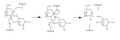 Mechanism of glycosidase action
 -
 Hypothesized substrate binding location


Ad. Transform your life with W8MD's Budget GLP-1 injections from $29.99


W8MD offers medical weight loss programs including NYC medical weight loss and Philadelphia medical weight loss offering:
- Affordable GLP1 shots (generic and brand names) such as
- Wegovy NYC (Semaglutide)
- Zepbound NYC /
- Learn more: Budget GLP1 weight loss injections NYC & Philadelphia GLP1 weight loss shots
- Most insurances accepted
- Lowest cost GLP1 weight loss NYC such as Semaglutide starting from $29.99/week and $45.00/week (Tirzepatide) with insurance.
- Prescription weight loss NYC including:
NYC weight loss doctor appointmentsNYC weight loss doctor appointments
Start your physician weight loss journey today at our:
- NYC medical weight loss
- Philadelphia medical weight loss
- Call 718-946-5500 for NYC or 215-676-2334 for Philadelphia
- Tags:
Budget glp1 weight loss NYC,
Zepbound NYC,
Philadelphia medical weight loss,
Wegovy NYC,
Budget Zepbound Philadelphia,
[** https://w8md.org/?page_id=62216 Affordable glp1 shots Philadelphia]


Advertise on WikiMD
|
WikiMD's Wellness Encyclopedia |
| Let Food Be Thy Medicine Medicine Thy Food - Hippocrates |
Medical Disclaimer: WikiMD is not a substitute for professional medical advice. The information on WikiMD is provided as an information resource only, may be incorrect, outdated or misleading, and is not to be used or relied on for any diagnostic or treatment purposes. Please consult your health care provider before making any healthcare decisions or for guidance about a specific medical condition. WikiMD expressly disclaims responsibility, and shall have no liability, for any damages, loss, injury, or liability whatsoever suffered as a result of your reliance on the information contained in this site. By visiting this site you agree to the foregoing terms and conditions, which may from time to time be changed or supplemented by WikiMD. If you do not agree to the foregoing terms and conditions, you should not enter or use this site. See full disclaimer.
Credits:Most images are courtesy of Wikimedia commons, and templates, categories Wikipedia, licensed under CC BY SA or similar.
Translate this page: - East Asian
中文,
日本,
한국어,
South Asian
हिन्दी,
தமிழ்,
తెలుగు,
Urdu,
ಕನ್ನಡ,
Southeast Asian
Indonesian,
Vietnamese,
Thai,
မြန်မာဘာသာ,
বাংলা
European
español,
Deutsch,
français,
Greek,
português do Brasil,
polski,
română,
русский,
Nederlands,
norsk,
svenska,
suomi,
Italian
Middle Eastern & African
عربى,
Turkish,
Persian,
Hebrew,
Afrikaans,
isiZulu,
Kiswahili,
Other
Bulgarian,
Hungarian,
Czech,
Swedish,
മലയാളം,
मराठी,
ਪੰਜਾਬੀ,
ગુજરાતી,
Portuguese,
Ukrainian
