P1PK blood group system
P1PK blood group system, also known as the Globoside blood group system, encompasses a collection of antigens found on the surface of red blood cells and other tissues. These antigens are significant in the field of transfusion medicine and have implications in certain medical conditions, including hemolytic disease of the newborn. The system is defined by the presence or absence of specific glycolipid substances in the cell membrane, which are recognized by corresponding antibodies. The most notable antigens in this system are P1, Pk, and NOR.
Antigens and Genetics[edit]
The P1PK blood group system is determined by the A4GALT gene, which encodes the enzyme alpha 1,4-galactosyltransferase. This enzyme is responsible for the synthesis of the Pk antigen (Gb3), which is a precursor for the P antigen (Gb4). The presence of the P1 antigen is dependent on the activity of another enzyme, which adds an additional sugar molecule to the P antigen. The genetic basis of these antigens explains the variability in their expression among different individuals.
Clinical Significance[edit]
The clinical relevance of the P1PK blood group system is primarily observed in transfusion medicine and in cases of hemolytic disease of the newborn. Antibodies against these antigens can arise in individuals who lack them, potentially leading to transfusion reactions if blood containing the antigen is transfused. Similarly, if a pregnant woman lacks a specific antigen that is present in the fetus, she may develop antibodies against the fetal red blood cells, leading to hemolytic disease of the newborn.
Transfusion Reactions[edit]
Transfusion reactions related to the P1PK blood group system are rare but can occur when blood from a donor with a different P1PK phenotype is transfused into a recipient with antibodies against one or more of the antigens in this system. These reactions can range from mild to severe and underscore the importance of thorough blood typing and crossmatching in transfusion practices.
Hemolytic Disease of the Newborn[edit]
Hemolytic disease of the newborn (HDN) due to antibodies against the P1PK antigens is uncommon. However, when it does occur, it can result in varying degrees of anemia, jaundice, and in severe cases, hydrops fetalis. Management of HDN involves close monitoring and, in some cases, intervention such as phototherapy or exchange transfusion.
Blood Typing and Identification[edit]
Identification of the P1PK antigens is performed through serological testing, using specific anti-P1, anti-Pk, and anti-NOR antibodies. These tests are essential for safe blood transfusion practices and for the investigation of hemolytic disease of the newborn related to the P1PK blood group system.
See Also[edit]

P1PK_blood_group_system[edit]
-
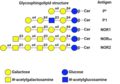 P1PK antigen structures
 -
 Serology interpretation of antibody panel for blood group antigens


Ad. Transform your health with W8MD Weight Loss, Sleep & MedSpa

Tired of being overweight?
Special offer:
Budget GLP-1 weight loss medications
- Semaglutide starting from $29.99/week and up with insurance for visit of $59.99 and up per week self pay.
- Tirzepatide starting from $45.00/week and up (dose dependent) or $69.99/week and up self pay
✔ Same-week appointments, evenings & weekends
Learn more:
- GLP-1 weight loss clinic NYC
- W8MD's NYC medical weight loss
- W8MD Philadelphia GLP-1 shots
- Philadelphia GLP-1 injections
- Affordable GLP-1 shots NYC
|
WikiMD Medical Encyclopedia |
Medical Disclaimer: WikiMD is for informational purposes only and is not a substitute for professional medical advice. Content may be inaccurate or outdated and should not be used for diagnosis or treatment. Always consult your healthcare provider for medical decisions. Verify information with trusted sources such as CDC.gov and NIH.gov. By using this site, you agree that WikiMD is not liable for any outcomes related to its content. See full disclaimer.
Credits:Most images are courtesy of Wikimedia commons, and templates, categories Wikipedia, licensed under CC BY SA or similar.
Translate this page: - East Asian
中文,
日本,
한국어,
South Asian
हिन्दी,
தமிழ்,
తెలుగు,
Urdu,
ಕನ್ನಡ,
Southeast Asian
Indonesian,
Vietnamese,
Thai,
မြန်မာဘာသာ,
বাংলা
European
español,
Deutsch,
français,
Greek,
português do Brasil,
polski,
română,
русский,
Nederlands,
norsk,
svenska,
suomi,
Italian
Middle Eastern & African
عربى,
Turkish,
Persian,
Hebrew,
Afrikaans,
isiZulu,
Kiswahili,
Other
Bulgarian,
Hungarian,
Czech,
Swedish,
മലയാളം,
मराठी,
ਪੰਜਾਬੀ,
ગુજરાતી,
Portuguese,
Ukrainian
