Single-molecule real-time sequencing
Single-molecule Real-time Sequencing
Single-molecule real-time sequencing (SMRT sequencing) is an advanced DNA sequencing technology that allows for the observation of DNA synthesis in real-time at the level of individual molecules. This method was developed by Pacific Biosciences and is known for its ability to produce long reads, which are beneficial for resolving complex genomic regions.
Principles of SMRT Sequencing[edit]
SMRT sequencing is based on the use of zero-mode waveguides (ZMWs), which are tiny wells that allow for the observation of single molecules of DNA polymerase as they synthesize DNA. Each ZMW contains a single DNA polymerase enzyme bound to a single DNA template molecule. The sequencing reaction occurs in the presence of fluorescently labeled nucleotides.
Zero-mode Waveguides[edit]
Zero-mode waveguides are nanostructures that confine light to a very small volume, allowing for the detection of fluorescent signals from individual nucleotide incorporations. This is crucial for observing the activity of a single DNA polymerase molecule without interference from other molecules.
Fluorescently Labeled Nucleotides[edit]
In SMRT sequencing, each of the four types of nucleotides (A, T, C, G) is labeled with a different fluorescent dye. As the DNA polymerase incorporates a nucleotide into the growing DNA strand, the corresponding fluorescent signal is emitted and detected. This allows for the determination of the DNA sequence in real-time.
Advantages of SMRT Sequencing[edit]
SMRT sequencing offers several advantages over other sequencing technologies:
- Long Read Lengths: SMRT sequencing can produce reads that are tens of thousands of base pairs long, which is significantly longer than those produced by other technologies such as Illumina sequencing.
- High Consensus Accuracy: By repeatedly sequencing the same molecule, SMRT sequencing can achieve high consensus accuracy, which is important for applications requiring precise sequence information.
- Detection of Epigenetic Modifications: SMRT sequencing can detect epigenetic modifications such as DNA methylation without additional sample preparation, as these modifications affect the kinetics of nucleotide incorporation.
Applications of SMRT Sequencing[edit]
SMRT sequencing is used in a variety of applications, including:
- De Novo Genome Assembly: The long reads produced by SMRT sequencing are ideal for assembling genomes from scratch, especially for organisms with complex or repetitive genomes.
- Structural Variation Detection: The ability to produce long reads allows for the detection of structural variations such as insertions, deletions, and inversions that are difficult to resolve with short-read sequencing technologies.
- Transcriptome Analysis: SMRT sequencing can be used to sequence full-length cDNA molecules, providing insights into alternative splicing and isoform diversity.
Challenges and Limitations[edit]
Despite its advantages, SMRT sequencing has some limitations:
- High Cost: The cost per base of SMRT sequencing is higher than that of short-read technologies, which can be a limiting factor for some projects.
- Lower Throughput: The throughput of SMRT sequencing is lower compared to other high-throughput sequencing technologies, which may require longer run times for large-scale projects.
Future Directions[edit]
Ongoing developments in SMRT sequencing technology aim to improve its accuracy, throughput, and cost-effectiveness. Advances in bioinformatics tools are also enhancing the ability to analyze and interpret the complex data generated by SMRT sequencing.
See Also[edit]
References[edit]
- Eid, J., et al. (2009). Real-time DNA sequencing from single polymerase molecules. *Science*, 323(5910), 133-138.
- Koren, S., et al. (2013). Hybrid error correction and de novo assembly of single-molecule sequencing reads. *Nature Biotechnology*, 31(11), 1087-1093.
External Links[edit]
- [Pacific Biosciences Official Website](https://www.pacb.com)
-
 Single-molecule real-time sequencing
 -
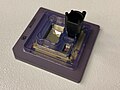 Single-molecule real-time sequencing
 -
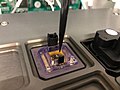 Single-molecule real-time sequencing


Ad. Transform your health with W8MD Weight Loss, Sleep & MedSpa

Tired of being overweight?
Special offer:
Budget GLP-1 weight loss medications
- Semaglutide starting from $29.99/week and up with insurance for visit of $59.99 and up per week self pay.
- Tirzepatide starting from $45.00/week and up (dose dependent) or $69.99/week and up self pay
✔ Same-week appointments, evenings & weekends
Learn more:
- GLP-1 weight loss clinic NYC
- W8MD's NYC medical weight loss
- W8MD Philadelphia GLP-1 shots
- Philadelphia GLP-1 injections
- Affordable GLP-1 shots NYC
|
WikiMD Medical Encyclopedia |
Medical Disclaimer: WikiMD is for informational purposes only and is not a substitute for professional medical advice. Content may be inaccurate or outdated and should not be used for diagnosis or treatment. Always consult your healthcare provider for medical decisions. Verify information with trusted sources such as CDC.gov and NIH.gov. By using this site, you agree that WikiMD is not liable for any outcomes related to its content. See full disclaimer.
Credits:Most images are courtesy of Wikimedia commons, and templates, categories Wikipedia, licensed under CC BY SA or similar.
Translate this page: - East Asian
中文,
日本,
한국어,
South Asian
हिन्दी,
தமிழ்,
తెలుగు,
Urdu,
ಕನ್ನಡ,
Southeast Asian
Indonesian,
Vietnamese,
Thai,
မြန်မာဘာသာ,
বাংলা
European
español,
Deutsch,
français,
Greek,
português do Brasil,
polski,
română,
русский,
Nederlands,
norsk,
svenska,
suomi,
Italian
Middle Eastern & African
عربى,
Turkish,
Persian,
Hebrew,
Afrikaans,
isiZulu,
Kiswahili,
Other
Bulgarian,
Hungarian,
Czech,
Swedish,
മലയാളം,
मराठी,
ਪੰਜਾਬੀ,
ગુજરાતી,
Portuguese,
Ukrainian
