Deoxycytidine monophosphate
Deoxycytidine monophosphate (dCMP) is a nucleotide that is used in the body for the synthesis of DNA. It is a type of deoxyribonucleotide, which are the building blocks of DNA. dCMP is composed of the nitrogenous base cytosine, the sugar deoxyribose, and one phosphate group.
Structure and Properties[edit]
dCMP is a monophosphate, meaning it has one phosphate group. The phosphate group is attached to the 5' carbon of the deoxyribose sugar. The nitrogenous base cytosine is attached to the 1' carbon of the deoxyribose sugar. The structure of dCMP allows it to pair with the nucleotide deoxyguanosine monophosphate (dGMP) in the DNA double helix.
Synthesis[edit]
dCMP is synthesized in the body through a series of enzymatic reactions. The first step in the synthesis of dCMP is the conversion of deoxycytidine to dCMP by the enzyme deoxycytidine kinase. This reaction requires the presence of ATP.
Function[edit]
dCMP is crucial for the synthesis of DNA. It pairs with dGMP in the DNA double helix, allowing the DNA strands to come together and form the double helix structure. This pairing is crucial for the accurate replication of DNA during cell division.
Clinical Significance[edit]
Alterations in the levels of dCMP can have significant clinical implications. For example, increased levels of dCMP have been associated with certain types of cancer. Additionally, mutations in the enzyme that synthesizes dCMP can lead to disorders such as immunodeficiency.
See Also[edit]
.svg)
This article is a biochemistry stub. You can help WikiMD by expanding it!
-
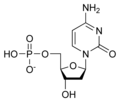 Chemical structure of Deoxycytidine monophosphate
 -
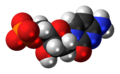 3D spacefill model of Deoxycytidine monophosphate anion


Ad. Transform your life with W8MD's
GLP-1 weight loss injections special from $29.99 with insurance
|
WikiMD Medical Encyclopedia |
Medical Disclaimer: WikiMD is for informational purposes only and is not a substitute for professional medical advice. Content may be inaccurate or outdated and should not be used for diagnosis or treatment. Always consult your healthcare provider for medical decisions. Verify information with trusted sources such as CDC.gov and NIH.gov. By using this site, you agree that WikiMD is not liable for any outcomes related to its content. See full disclaimer.
Credits:Most images are courtesy of Wikimedia commons, and templates, categories Wikipedia, licensed under CC BY SA or similar.
Translate this page: - East Asian
中文,
日本,
한국어,
South Asian
हिन्दी,
தமிழ்,
తెలుగు,
Urdu,
ಕನ್ನಡ,
Southeast Asian
Indonesian,
Vietnamese,
Thai,
မြန်မာဘာသာ,
বাংলা
European
español,
Deutsch,
français,
Greek,
português do Brasil,
polski,
română,
русский,
Nederlands,
norsk,
svenska,
suomi,
Italian
Middle Eastern & African
عربى,
Turkish,
Persian,
Hebrew,
Afrikaans,
isiZulu,
Kiswahili,
Other
Bulgarian,
Hungarian,
Czech,
Swedish,
മലയാളം,
मराठी,
ਪੰਜਾਬੀ,
ગુજરાતી,
Portuguese,
Ukrainian
