Tropic acid
Tropic Acid[edit]
Tropic acid is an organic compound with the chemical formula C9H10O3. It is a white crystalline solid that is soluble in water and alcohol. Tropic acid is a chiral molecule and exists in two enantiomeric forms. It is an important intermediate in the biosynthesis of atropine and other tropane alkaloids.
Structure and Properties[edit]
Tropic acid consists of a phenyl group attached to a 3-hydroxy-2-phenylpropanoic acid backbone. The presence of the hydroxyl group and the carboxylic acid group makes it a versatile compound in organic synthesis. The compound is optically active due to the presence of a chiral center at the carbon atom bearing the hydroxyl group.
Synthesis[edit]
Tropic acid can be synthesized through several methods. One common method involves the reaction of phenylacetic acid with acetaldehyde in the presence of a base, followed by oxidation. Another method involves the use of phenylhydracrylic acid as a starting material, which undergoes a series of reactions to yield tropic acid.


Applications[edit]
Tropic acid is primarily used in the synthesis of atropine, a medication used to treat certain types of nerve agent and pesticide poisonings, as well as some types of slow heart rate. It is also used in the synthesis of other tropane alkaloids, which have various pharmacological effects.
Related Compounds[edit]
Tropic acid is related to several other compounds, including tropine, tropinone, and atropine. These compounds share a common tropane ring structure and are important in the field of medicinal chemistry.
Related Pages[edit]
References[edit]
Tropic acid[edit]
Tropic_acid[edit]
-
 Phenylhydracrylic acid structure
 -
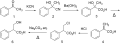 Tropic acid synthesis pathway
Ad. Transform your life with W8MD's
GLP-1 weight loss injections special from $29.99 with insurance
|
WikiMD Medical Encyclopedia |
Medical Disclaimer: WikiMD is for informational purposes only and is not a substitute for professional medical advice. Content may be inaccurate or outdated and should not be used for diagnosis or treatment. Always consult your healthcare provider for medical decisions. Verify information with trusted sources such as CDC.gov and NIH.gov. By using this site, you agree that WikiMD is not liable for any outcomes related to its content. See full disclaimer.
Credits:Most images are courtesy of Wikimedia commons, and templates, categories Wikipedia, licensed under CC BY SA or similar.
Translate this page: - East Asian
中文,
日本,
한국어,
South Asian
हिन्दी,
தமிழ்,
తెలుగు,
Urdu,
ಕನ್ನಡ,
Southeast Asian
Indonesian,
Vietnamese,
Thai,
မြန်မာဘာသာ,
বাংলা
European
español,
Deutsch,
français,
Greek,
português do Brasil,
polski,
română,
русский,
Nederlands,
norsk,
svenska,
suomi,
Italian
Middle Eastern & African
عربى,
Turkish,
Persian,
Hebrew,
Afrikaans,
isiZulu,
Kiswahili,
Other
Bulgarian,
Hungarian,
Czech,
Swedish,
മലയാളം,
मराठी,
ਪੰਜਾਬੀ,
ગુજરાતી,
Portuguese,
Ukrainian
