Killer activation receptor
Killer Activation Receptor (KAR) is a type of receptor found on the surface of certain immune cells, notably Natural Killer (NK) cells. These receptors play a crucial role in the immune system's ability to recognize and destroy infected or malignant cells. Understanding the function and mechanisms of KARs is essential for advancing immunotherapy and developing treatments for cancer and viral infections.
Overview
Killer Activation Receptors are part of a larger family of receptors known as NK cell receptors. NK cells are a type of lymphocyte, or white blood cell, that plays a vital role in the innate immune response. Unlike T cells and B cells of the adaptive immune system, NK cells do not require prior exposure to a pathogen to recognize and attack it. Instead, they rely on a balance of activating and inhibitory signals received through their receptors to determine whether to kill a target cell.
Function
The primary function of KARs is to recognize specific ligands (molecules) expressed on the surface of stressed, transformed, or infected cells. When a KAR binds to its ligand, it sends an activating signal to the NK cell, prompting it to release cytotoxic granules that can kill the target cell. This mechanism is crucial for the early defense against viral infections and for the surveillance against cancerous cells.
Types of KARs
There are several types of Killer Activation Receptors, each with its specific ligands and signaling pathways. Some well-known KARs include:
- NKG2D: Recognizes stress-induced ligands often upregulated in infected or tumor cells.
- NKp46, NKp30, and NKp44: Part of the natural cytotoxicity receptors (NCRs) that play a key role in the recognition and killing of tumor cells.
Regulation
The activity of KARs is tightly regulated to prevent unintended tissue damage. NK cells must integrate signals from both activating receptors like KARs and inhibitory receptors to make a decision. Inhibitory receptors recognize molecules such as MHC class I presented on healthy cells, providing a "don't kill" signal that counterbalances the activating signals.
Clinical Significance
Understanding the pathways and mechanisms of KARs has significant implications for clinical medicine. Therapeutic strategies that enhance the activation of NK cells through KARs are being explored for cancer immunotherapy. Additionally, some viral pathogens have evolved mechanisms to evade NK cell detection by downregulating ligands for KARs, highlighting the importance of these receptors in antiviral defense.
Research and Future Directions
Research into Killer Activation Receptors continues to uncover new ligands, signaling pathways, and regulatory mechanisms. Future therapies may involve manipulating KARs or their ligands to boost the immune response against cancer or to create more effective vaccines against viral infections.

This article is a immunology stub. You can help WikiMD by expanding it!

This article is a cell biology stub. You can help WikiMD by expanding it!
-
Killer activation receptor
-
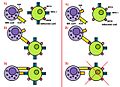 KAR image
 -
 KAR fosforilation


Ad. Transform your life with W8MD's
GLP-1 weight loss injections special from $29.99 with insurance
|
WikiMD Medical Encyclopedia |
Medical Disclaimer: WikiMD is for informational purposes only and is not a substitute for professional medical advice. Content may be inaccurate or outdated and should not be used for diagnosis or treatment. Always consult your healthcare provider for medical decisions. Verify information with trusted sources such as CDC.gov and NIH.gov. By using this site, you agree that WikiMD is not liable for any outcomes related to its content. See full disclaimer.
Credits:Most images are courtesy of Wikimedia commons, and templates, categories Wikipedia, licensed under CC BY SA or similar.
Translate this page: - East Asian
中文,
日本,
한국어,
South Asian
हिन्दी,
தமிழ்,
తెలుగు,
Urdu,
ಕನ್ನಡ,
Southeast Asian
Indonesian,
Vietnamese,
Thai,
မြန်မာဘာသာ,
বাংলা
European
español,
Deutsch,
français,
Greek,
português do Brasil,
polski,
română,
русский,
Nederlands,
norsk,
svenska,
suomi,
Italian
Middle Eastern & African
عربى,
Turkish,
Persian,
Hebrew,
Afrikaans,
isiZulu,
Kiswahili,
Other
Bulgarian,
Hungarian,
Czech,
Swedish,
മലയാളം,
मराठी,
ਪੰਜਾਬੀ,
ગુજરાતી,
Portuguese,
Ukrainian

